

 Medically Reviewed
Parenthood
Nutrition for Babies 0-2 Years: A Month-by-month Feeding Guide
Feb 3, 2026
•6 min read
Share Article

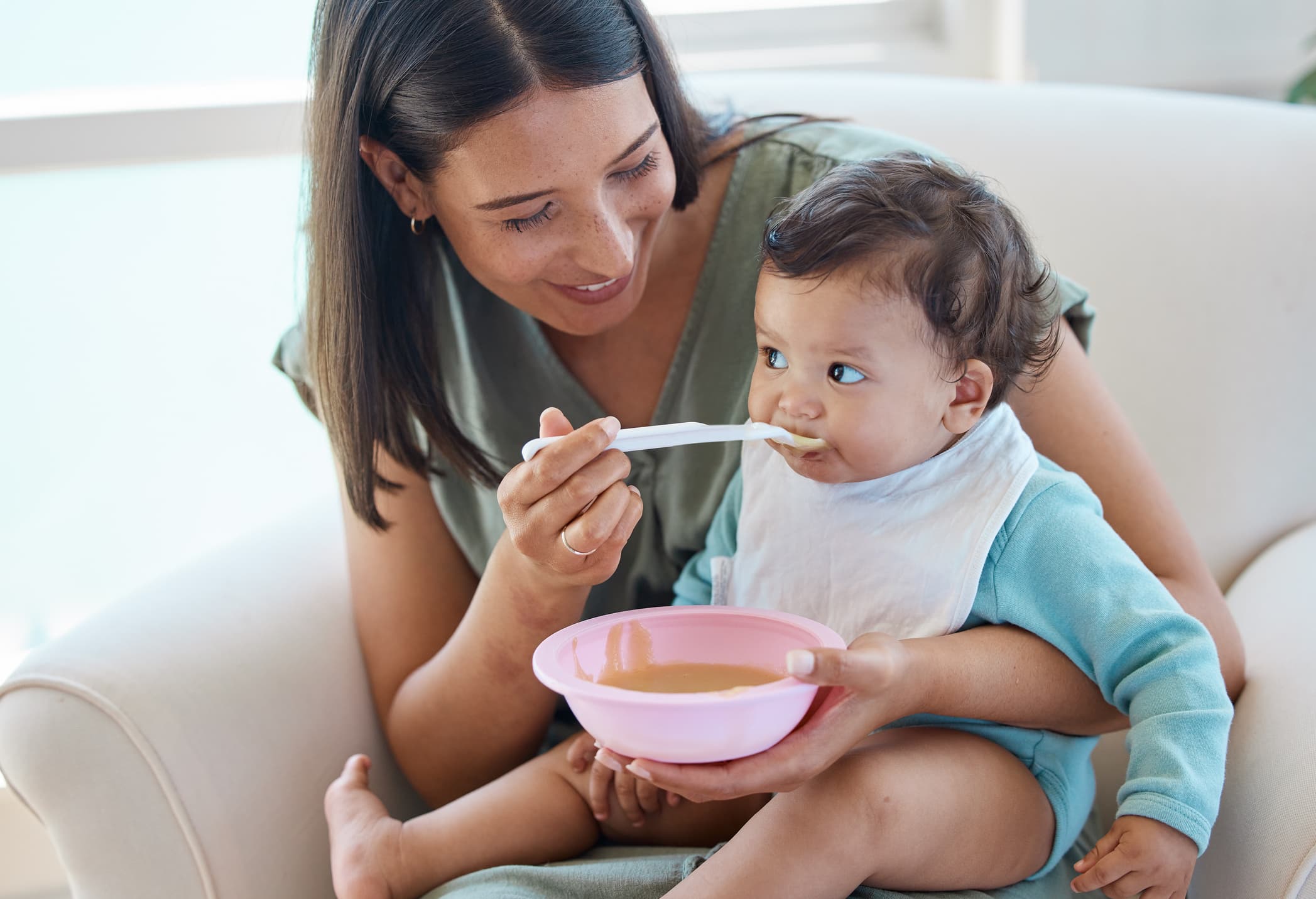
Caring for a newborn is both exhilarating and nerve-wracking, as you want to do your best but often feel unsure about what to do. While much of parenting is intuitive and comes naturally, it helps to stay ahead of the curve by learning from experts and trusted resources. Since nutrition is a cornerstone of newborn care, giving them sustenance and allowing them to thrive, your first step should be to learn more from a newborn feeding guide. This will give you an evidence-based approach to ensure that your baby receives the best possible nutritional support for healthy growth and development, whether breastfed or formula-fed.
Newborn feeding guide: Understanding the basics
As per the recommendations of the World Health Organisation and other health agencies, newborns must be breastfed exclusively for the first six months of life and should remain the primary source of nutrition for the first year. Similarly, this applies to newborn formula feeding guides, as modern formula is specifically designed to provide babies with all the needed nutrition. Based on decades of research, newborn formula available today includes the optimal balance of essential nutrients, including protein, fats, carbohydrates, vitamins, and minerals. This makes it a viable alternative to breast milk when needed, although it cannot provide your baby with antibodies that are only present in breast milk.
Aside from providing breast milk or formula as the primary source of nutrition for the first year, there are a few other basics that every parent should know:
- Pay attention to your baby’s behavioural cues that show hunger and fullness instead of relying solely on a strict schedule. This type of responsive feeding will also help your baby develop self-regulation skills.
- Ensure that your baby is in a comfortable position, with the head well-supported. Proper latching for breastfeeding is also important, so talk to a specialist and refer to breastfeeding guides. With formula feeding, simply ensure that the bottle is gently tilted.
- Burp your baby frequently during and between feeds to reduce spitting up of food and gas buildup.
Newborns must be breastfed exclusively for the first six months of life and should remain the primary source of nutrition for the first year.
Newborn formula feeding schedule: Weeks 0–12
Following a newborn formula feeding schedule by week can help considerably during the first few months, but it’s important to remember that these are only averages. Individual recommendations can vary, depending on your baby’s growth rate, weight gain, and bowel movements.
- Weeks 1-2:
Start with about 15-60 mL per feed at first, gradually increasing this over the course of the week. Feed in response to hunger cues, typically around 8-12 times a day. - Weeks 2-4:
Feeding quantity can be raised to about 60-90 mL per feed by this time, with a feeding session every 2-4 hours. - Weeks 4-8:
Feeding amounts should reach about 90-120 mL per feed by week 4, but the frequency of feeding can be reduced during this time to roughly 6-8 feeds a day. - Weeks 8-12:
The amount of feed varies between 90-150 mL per feeding session, with feeds every 3-4 hours.
Newborn formula feeding guide: Choosing the right formula
Here are some essential considerations for choosing the right formula:
- Ask your paediatrician for personalised advice and get approval before starting any product.
- A standard starting formula is usually cow milk-based and iron-fortified to meet requirements.
- In case of premature birth, paediatricians will prescribe specialised formulas. In all other cases, make sure to use an age-appropriate formula.
- Special formulas are also available if medically required for problems like allergies, severe reflux or metabolic disorders.
- Depending on convenience and sterility requirements, consider whether powders or concentrated liquids make the most sense, while checking labels carefully for handling instructions.
- Do not switch between formulas without prior approval from your paediatrician.
While formula feeding or breastfeeding should continue beyond six months, most expert feeding guidelines for infants emphasise the importance of introducing complementary foods at six months.
Newborn feeding schedule by week: Month-by-month progression
Feeding patterns and requirements evolve over the first few months, making it important to understand this natural progression.
- Month 0-1:
Feeds are short and more frequent, with a focus on developing latching technique, learning cues, establishing a responsive routine, and bonding through contact. - Months 1-2:
Your newborn's feeding routine is better developed and more efficient, so there may be longer stretches of sleep between some feeds. Hunger and fullness cues also become more obvious. - Months 2-4:
The amount consumed per session steadily increases, and there is better coordination of different feeding reflexes, including sucking, swallowing, and breathing. Feeds also become more social and interactive. - Months 4-6:
At this stage, your responsive newborn feeding makes way for more predictable patterns, so it’s good to establish routines. Infants also begin developing higher motor and oral skills, which will allow them to eventually consume solid foods. Do not introduce other foods before six months. Research indicates that introducing complementary foods before 4-6 months is associated with increased rates of harder stools and respiratory symptoms compared to milk-only feeding.
Feeding guidelines for infants: 6–24 months
While formula feeding or breastfeeding should continue beyond six months, most expert feeding guidelines for infants emphasise the importance of introducing complementary foods at six months. This means that breast milk or formula should remain the primary food for nutrition, while other healthy and infant-safe foods may be introduced to increase nutrition and cultivate healthy eating habits for life. Feeding guidelines for infants recommend:
- Introduce water and the practice of sipping from a cup.
- Start with pureed food and soft mashed vegetables, including leafy greens, fruit, eggs, and meat.
- Start small, limiting complementary foods to one or two tablespoons per feed.
- Introduce potential allergens like peanuts early, in small quantities, and one at a time, as early introduction is associated with reduced risk of allergies.
- Introduce more textures over the next few months, including finely diced and finger foods, especially as your baby shows more interest.
- Feeding portions may also be increased gradually by 9 months.
- From 12 months, whole cow’s milk may be introduced with the approval of your paediatrician.
- Avoid introducing processed foods with added sugar and salt during these first two years.
- Always upgrade your child’s food consistency. If you are offering semi-solid foods, avoid giving other liquids apart from breast milk. Once solid foods are introduced, avoid reverting to semi-solid textures. Solid foods can be introduced as early as the time when the child is able to sit independently without support. Early introduction of solid textures supports jaw development and can contribute to better speech clarity and earlier language milestones.
- After one year of age, encourage the use of sippers for liquid feeds. This further aids jaw muscle maturation and helps improve clarity of speech sounds.
Discard any prepared formula left at room temperature after two hours.
Formula guide for newborns: Safety and best practices
Here are some essential practices to ensure optimal nutrition and safety when following a formula guide for newborns:
- Always check labels carefully and make sure that the formula hasn’t expired.
- Make sure that the package is sealed perfectly and not damaged in any way.
- Maintain strict hygiene and bottle sterilisation practices to prevent infections.
- Follow label instructions in terms of dosage and water ratio precisely.
- Only use boiled and filtered water to prepare the formula.
- Discard any prepared formula left at room temperature after two hours.
- If refrigerated promptly, leftover formula may be stored for up to 24 hours.
Summary and key takeaways for parents
Feeding your baby becomes intuitive and doesn’t always require detailed guidance, but a newborn feeding guide helps to set healthy targets and strategies to ensure that your baby gets all the required nutrition for healthy growth and development. Following an evidence-based newborn feeding guide also helps to create feeding routines and behaviours that make it easier for babies to transition to healthy eating as they grow older, setting them up for a healthier future.
Frequently Asked Questions
1. Is infant formula a safe alternative to breast milk?
Yes, modern formula provides the optimal balance of essential nutrients (based on research) and is a viable alternative when needed, but it does not contain the antibodies present in breast milk.
2. How will I know when to feed my baby?
Use responsive feeding by watching your baby’s hunger and fullness cues rather than following only a strict schedule.
3. When should I start adding solid foods?
Introduce complementary foods at six months while continuing breast milk or formula as the main source of nutrition.
Share Article