

 Medically Reviewed
Parenthood
Baby Acne: Everything Parents Need to Know
May 26, 2026
•6 min read
Share Article

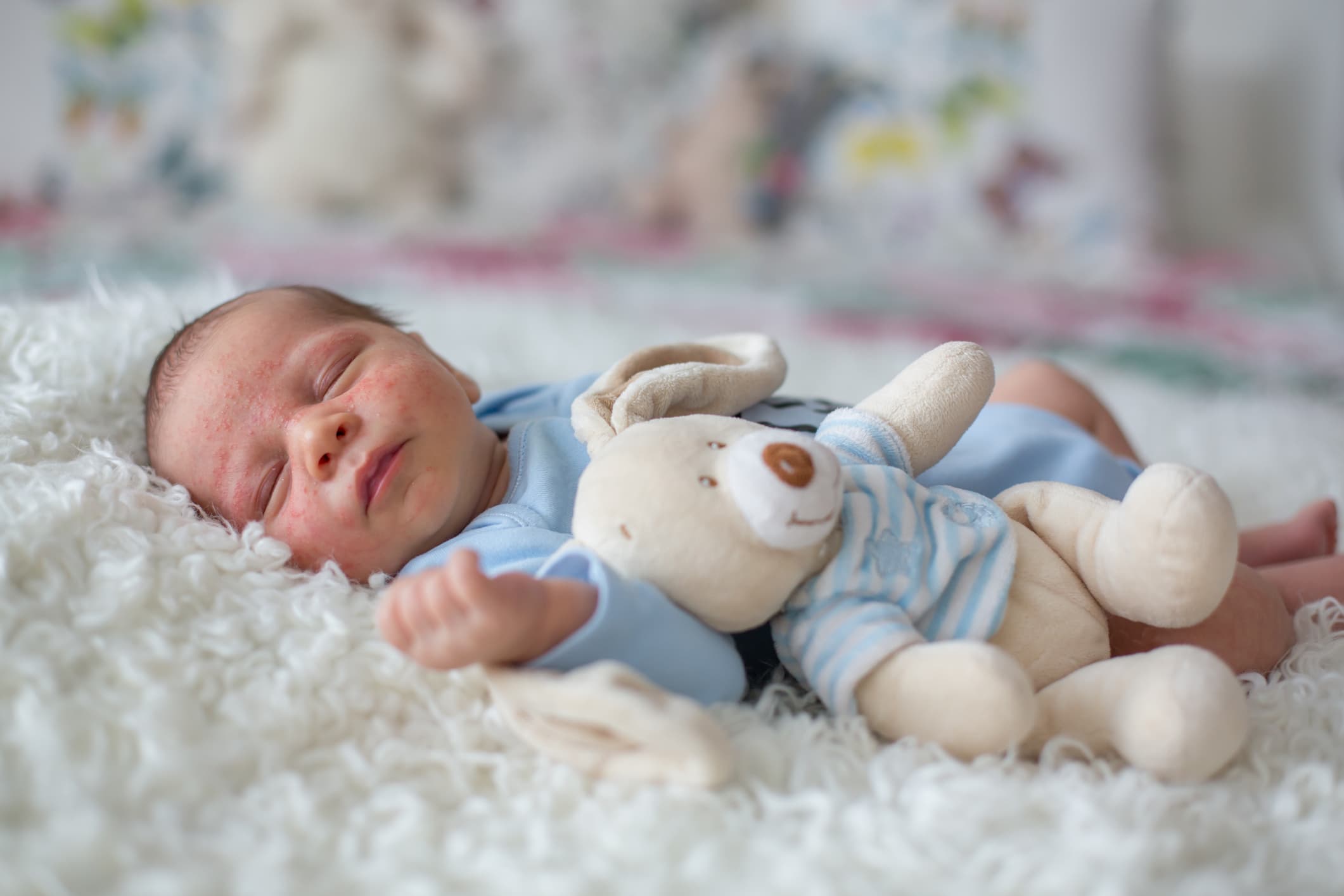
Baby acne is one of those newborn surprises that parents do not really expect. One moment, the baby’s skin looks soft and clear, and the next, tiny spots appear on the cheeks. It can feel worrying, especially for new parents. Many people think acne only happens to teenagers, so seeing it on a newborn can be confusing and even a little stressful.
The good news is that baby acne is very common. It is usually harmless and goes away on its own. Many babies develop baby acne on face in the first few weeks of life. The spots may look red or bumpy, but they do not usually bother the baby at all.
Understanding the stages of baby acne, knowing what causes these breakouts, and learning gentle baby acne treatment options can help parents feel more relaxed. Baby acne is not caused by dirt or poor hygiene. It is simply part of a newborn’s skin adjusting to the outside world.
Understanding baby acne and who it affects
Baby acne is a very common skin condition that affects newborns and young infants. It usually appears as small red bumps or tiny whiteheads, most often on the cheeks, nose, or forehead. These spots may look similar to teenage acne, but the causes are different, and the condition is usually much milder.
Newborn spots and acne-like breakouts are very common in the first weeks of life and generally improve without any treatment. Baby acne often develops when babies are around two to four weeks old, although it can sometimes appear earlier or slightly later.
Baby acne tends to affect babies because their skin is still developing. Newborn skin is thinner, more sensitive, and still learning how to balance natural oils. This makes it more likely to react with small breakouts.
Baby acne usually appears as small red bumps or tiny whiteheads, most often on the cheeks, nose, or forehead.
Identifying baby acne on the face and body
Baby acne can be easy to spot once parents know what to look for. It usually appears as small bumps or pimples, and it is most common in the early weeks of life.
- Baby acne on the face
The cheeks are the most common site for baby acne. Parents may notice tiny red bumps, small whiteheads, or mild redness on the skin. The forehead, nose, and chin can also be affected. This is why baby acne on the face is often the first thing parents spot during feeding or cuddling.
- Baby acne on the body
Although the face is the main area, baby acne can sometimes spread to the neck, upper chest, or back. These spots may look similar to those on the cheeks. This does not usually mean the acne is serious, just that newborn skin is very sensitive and still adjusting.
The common stages of baby acne
The baby's acne tends to take a natural course over time. Knowledge of the phases of baby acne may help parents feel less anxious, particularly when the spots appear to evolve each week. The majority of the babies pass through these phases without requiring special attention.
- Early stage: First small bumps appear
Parents might see a small number of tiny red bumps or whiteheads on the cheeks or chin in the beginning. This usually occurs in babies of two-four weeks old. The spots can be mild initially, and they may occur very suddenly, even when there were none on the skin previously.
- Middle stage: Spots become more noticeable
As the acne progresses, one can notice that the bumps can grow in number somewhat, and the skin surrounding them can appear rather red/irritated. This phase might seem scary, but it is highly natural. Most parents believe that it is becoming worse when it is usually a part of nature. - Final stage: Gradual clearing of the skin
Over the next few weeks, the spots begin to fade slowly. The redness decreases, and the bumps would be smaller, and the skin of the baby would begin to appear clearer. The phases of baby acne tend to end with the disappearance of the acne naturally, and without leaving any scars or permanent traces.
Although the face is the main area, baby acne can sometimes spread to the neck, upper chest, or back.
Primary causes of newborn skin breakouts
Baby acne is not caused by poor hygiene, dirty skin, or anything parents may or may not be doing. It is usually an innate baby skin reaction. Baby acne is commonly associated with hormones that influence the oil glands of the baby. These hormones are totally normal at an early age and can temporarily cause the skin to be temporarily activated and produce oil, and hence causing small breakout. Neonatal acne is believed to occur when maternal hormones passed to the baby before birth temporarily stimulate the infant’s oil (sebaceous) glands, leading to small breakouts.
Infants' skin is also very sensitive. Spots may be occasionally more evident due to everyday influences like drool, milk residue, coarse fabrics or even a hot climate. The clothing can cause sensitivity in the delicate skin.
The thing is that the baby acne serves as a normal adjustment of a newborn. The skin is getting used to life outside of the womb, and little breakouts are normal in the process.
Safe and gentle baby acne treatment
Many parents search online for baby acne treatment, but the safest approach is often doing very little. Baby acne usually clears up on its own with time. Acne in babies normally clears with time. That parents not scrub the skin or squeeze the spots and use strong skincare products. The baby's skin is tender, and harsh products will only worsen irritation.
Basic care involves washing the baby's face with a gentle stream of lukewarm water once a day. The skin must be patted off with a soft material after washing and not rubbed. Oily lotions, heavy creams, or adult skin care products should be avoided by the parents. These may occlude pores and increase the bumps.
The best treatment of baby acne is, in most instances, gentle treatment, patience, and no interference with the spots.
Oily lotions, heavy creams, or adult skin care products should be avoided by the parents.
When does baby acne go away?
A very common question parents ask is when baby acne goes away, because the spots can feel very noticeable. Baby acne, in most instances, disappears in a few weeks to a few months. Neonatal acne tends to resolve on its own and does not leave any scars. Neonatal acne usually resolves on its own without leaving any scars. Every baby’s skin develops at its own pace, so there is no set timeline for improvement.
Although baby acne might take months to go away, it is generally harmless. Parents can feel assured that it usually fades away when the baby grows up, and the skin becomes mature.
Distinguishing baby acne from other conditions
Not every newborn rash is baby acne. Some skin conditions may look similar but have different signs. Baby acne usually appears as pimples or small bumps, mainly on the cheeks. Other rashes may cause dry, scaly patches, widespread redness, or irritation in skin folds. Knowing the difference is helpful, but parents should never feel afraid to ask for reassurance if unsure.
When to consult a healthcare provider
Baby acne is usually mild and harmless, but parents should consult a healthcare provider if the rash looks severe, does not improve over time, or if the baby seems unwell. Parents should also seek advice if they are unsure whether the spots are acne or another condition. Sometimes, professional reassurance is the most helpful part of care.
Conclusion
Baby acne can feel like a strange little newborn surprise. Parents expect nappies, feeding schedules, and sleepless nights, but tiny face spots can still cause worry. The good news is that baby acne is extremely common, harmless, and almost always temporary.
Understanding the stages of baby acne, recognising baby acne on the face, and using gentle baby acne treatment approaches can help parents stay calm. And for anyone wondering when baby acne goes away, the answer is usually: sooner than it feels at the moment.
Frequently Asked Questions
1. How do you clear up baby acne?
Baby acne usually clears naturally. Gentle washing with water and avoiding harsh products is best. Experts also advise leaving the spots alone and not scrubbing them.
2. Can breastmilk clear baby acne?
There is no strong medical evidence that breastmilk reliably clears baby acne. Most cases improve naturally with time and gentle care.
3. How long will baby acne last?
Baby acne often lasts a few weeks to a few months. The American Academy of Dermatology notes it usually resolves without scarring.
Share Article