

 Medically Reviewed
Longevity
How Walking Daily Supports Longevity What Studies Show
Dec 17, 2025
•7 min read
Share Article

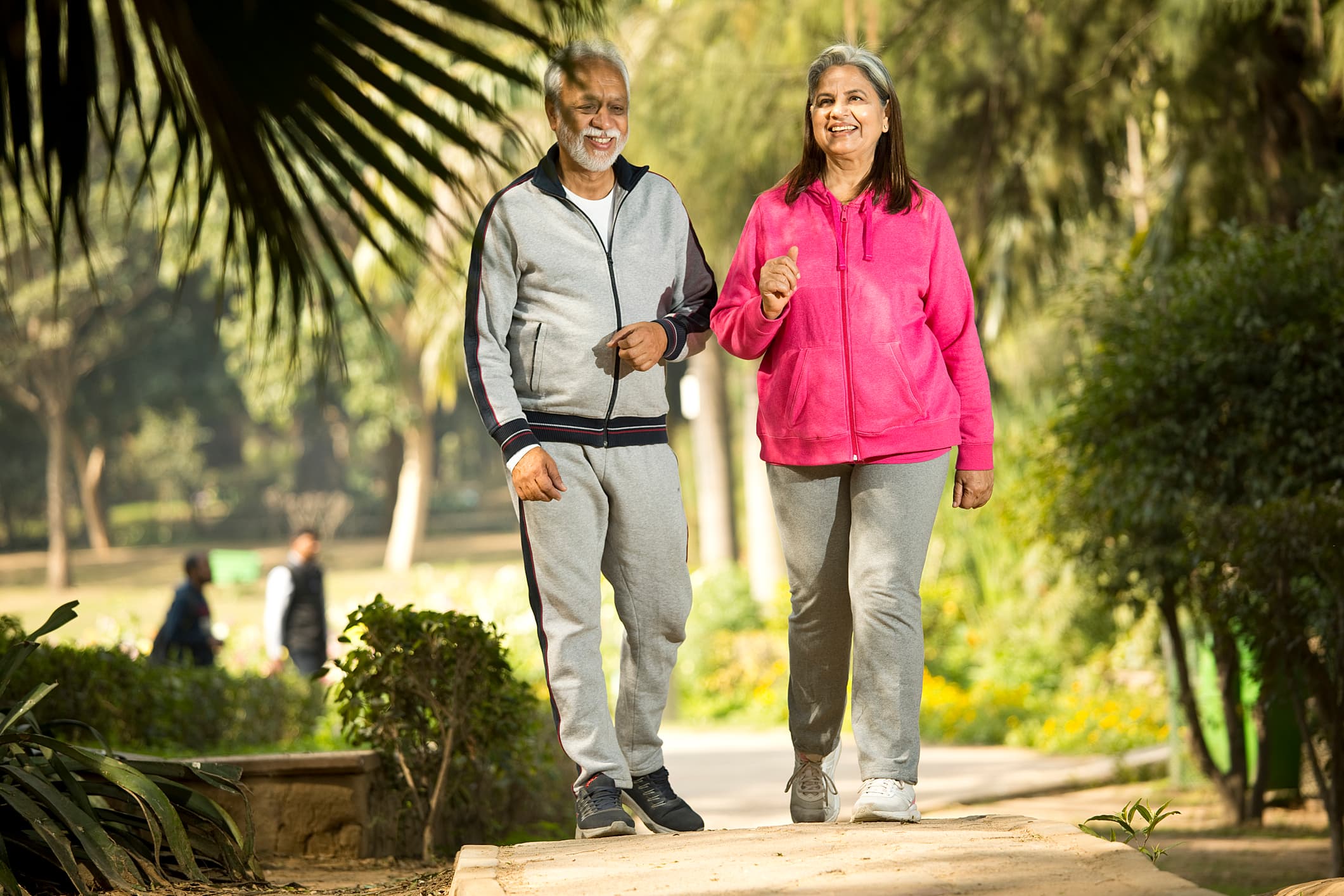
The portrayal of Indian roads as an obstacle course for pedestrians by YouTubers and social media influencers is no exaggeration. While walking on such roads may seem counterproductive to the goal of living longer, you can enjoy daily walks at neighbourhood parks, gardens, and promenades without worrying about potholes or vehicular traffic. They’re also better spaces to experiment with novel walking trends like reverse walking, side-stepping, and Japanese walking, which might not be particularly safe when walking on roads. Additionally, walking in green or natural spaces has been shown to enhance the health benefits of walking, also increasing life expectancy.
But is the connection between walking and longevity proven, or is it merely speculative and based on the benefits of walking every day? A closer look at the research gives us the full picture.
Why walking is considered a key activity for longevity
Walking is often linked with increased life expectancy because that’s what the evidence shows. Research spanning several decades has shown that walking is without a doubt the best exercise for longevity, as it’s a low-impact exercise that can be practised by anyone, anywhere, offering a wide range of physical and mental health benefits, significantly lowering the risk of most chronic lifestyle diseases. Walking also helps strengthen the musculoskeletal and cardiovascular system, supports healthy weight management, and enhances mood and cognitive function.
These walking benefits have been demonstrated in numerous studies. An extensive review of the evidence conducted by researchers at the University of Oklahoma Health Sciences Centre covered well over 100 studies, including large-scale studies with more than 300,000 participants. In their words, “the evidence overwhelmingly supports walking as a powerful anti-ageing intervention.” Recent studies that were published in the British Journal of Sports Medicine and Annals of Internal Medicine suggest that walking daily can increase life expectancy by as much as seven years, with significant reductions in all-cause mortality.
These walking benefits appear to be cumulative, with even short walks of 10-15 minutes a day yielding impressive results. However, the gains were even higher for those who engaged in longer brisk walks every day.
Walking daily can increase life expectancy by as much as seven years.
Physical health benefits of walking every day
Walking every day is linked with a variety of physical health benefits, including:
- Improved cardiovascular and circulatory health
- Reduced risk of diabetes, stroke and cardiac events
- Lower incidence of certain cancers
- Lower rate of severe infections
- Supports healthy metabolism and digestion
- Better weight management
- Stronger bones and muscles
- Better sleep quality
These are some of the most notable and well-documented benefits of walking, but they only touch the surface.
Choose from different walking styles
Although our social media feeds are often dominated by ludicrous health trends that pose a greater risk of harm than benefit, some of the recent walking exercise trends have proven benefits. Some walking styles worth considering include:
- Japanese walking:
Also described as interval walking, this simply refers to a walking style in which you switch between a slow and fast pace in intervals of about three minutes. This type of exercise training promotes greater improvements in cardiovascular fitness and strength, with studies linking it to healthier ageing and quality of life. - Nordic walking:
An activity that has long been practised in Scandinavian countries, Nordic walking involves the use of special poles to push or pull yourself along, as you’d do when skiing. The practice gained global popularity on social media as research shows that it can increase caloric expenditure when walking by up to 40%, and it’s also a full-body exercise with low impact on the joints. - Power walking:
A simple approach to walking that simply requires a consistent fast pace at about six to eight kmph, power walking is simply a brisk walking style with slightly exaggerated arm movements for enhanced speed. It was popularised with recent trends like the "6-6-6" rule and "Hot Girl Walks". Power walking is proven to boost cardiovascular health, endurance, and weight loss. - Silent walking:
Another walking trend that was popularised on TikTok, silent walking is simply a more mindful approach to walking. It calls on people to walk without digital distractions, including phones, whether used for music or podcasts, while walking, instead encouraging walkers to focus on breathing, bodily sensations, and their surroundings. - Incline walking:
Incline walking, as the name suggests, requires you to walk on an inclined surface, such as up a gentle slope or on an inclined treadmill. This type of walking is known to increase resistance, engaging the leg muscles such as the glutes and hamstrings. As it’s more strenuous, it promotes increased calorie expenditure and greater improvements in muscle strength. - Reverse walking:
Reverse or backwards walking has been around long before social media, but it gained more popularity in recent years. It means that you literally walk backwards. Research shows that it not only improves quad strength but is also great for enhancing balance and step length. Of course, it’s best not to try this on roads with vehicular traffic. - Sidestepping:
This novel approach to walking for exercise uses lateral movements, literally side-stepping, instead of stepping forward or backwards. It’s creating a buzz online as it offers unique benefits targeting different groups of muscles. Evidence suggests that it may help stabilise the hip and knee joints, strengthening balance and reducing the risk of falls.
Japanese walking involves alternating between slow and fast paces every three minutes.
How walking supports heart health
Most people associate cardiovascular exercise with high-intensity workouts at the gym, but it’s become increasingly clear that walking is one of the best and most accessible forms of exercise for better heart health. Cardiovascular exercise refers to any moderate-intensity activity that raises your heart rate, causing the heart, lungs, and muscles to work harder. Brisk walking achieves all of these goals and can lead to a significant reduction in the risk of heart attacks and stroke.
Studies show that walking and heart health are closely connected; regular brisk walking for about 30 minutes a day can bring about a 53% reduction in the risk of cardiovascular disease mortality, and a 44% reduction in the risk of stroke, as compared to individuals who walk at a slow pace.
Walking is associated with cardiovascular benefits for several reasons:
- Increases your heart rate briefly
- Strengthens the heart muscles
- Boosts circulation throughout the body
- Improves lipid and blood glucose levels
- Lowers your blood pressure
- Supports healthy weight loss
- Promotes stress reduction and mood regulation
To enjoy these heart-health benefits, walk fast enough to elevate your heart rate and breathing while still being able to talk. Typically, walking at about four kmph is considered moderate intensity. While walking for 10 to 15 minutes a day will also make a difference, the benefits are greater for people who walk for at least 30 minutes a day, five days a week.
Mental and cognitive benefits of regular walking
Walking is regarded as one of the most effective ways to stay active and boost mental wellbeing as it serves as a cardiovascular exercise, which improves blood flow throughout the body, and most notably to the brain. The improved supply of blood and, consequently, oxygen to the brain benefits various functions, including memory, problem-solving, and attention. This is why mental health experts recommend regular physical exercise as a strategy for protecting against age-related degenerative brain disease, including dementia.
Walking helps promote mental health as it stimulates the release of various mood-boosting chemicals such as serotonin, which makes it easier to cope with stress, also protecting against depressive and anxiety disorders. Regular walking promotes beneficial changes in the physical structure of the brain, increasing volume in the hippocampus and frontal lobe. This is associated with improved mental acuity, learning skills, problem-solving, memory, and mental sharpness. Studies show that walking just one mile or 1.6 km a day leads to increases in brain volume and a 50% reduction in the risk of cognitive impairment.
Tips to make walking a consistent part of your routine
- Start with short walks and schedule them into your daily routine
- Try to use walking as a mode of transport instead of using vehicles
- Take up walking as a fun activity to enjoy with a friend
- Track your progress with fitness apps to make the experience more rewarding
- Most importantly, cut yourself some slack and don’t feel disheartened if you can’t get into the habit of walking. Starting a new routine can be tough, but with patience and persistence, you can achieve it.
When it comes to living a longer and healthier life, remember that every little healthy habit makes a difference. In addition to walking, try to eat healthy, limit alcohol intake, avoid smoking, get enough sleep, and lower your stress levels.
Start with short walks and schedule them into your daily routine.
Walk your way to a longer life
Walking is far more than just a simple form of exercise; it is a powerful tool for enhancing health, boosting longevity, and improving overall well-being. By incorporating regular walks into your daily routine, you support your heart, muscles, and mind, all while enjoying the outdoors and reducing stress. Science consistently shows that even moderate, consistent walking can make a significant difference over time. So, take that first step today; your body and mind will thank you for years to come.
Frequently Asked Questions
1. Are walking trends like Japanese walking and side-walking really safe or healthy?
Although it may come as a surprise, these trends are actually healthy and safe. Both Japanese walking and side-walking can be incorporated into your regular walking routine to amplify and expand their benefits.
2. What are the proven mental benefits of walking?
Walking is known to lower the risk of mood disorders, including depression and anxiety, while also protecting against cognitive decline associated with ageing.
3. What is the best exercise for longevity?
Walking is widely regarded as one of the best exercises for longevity because of its accessibility and adaptability, making it a safe form of exercise for people without the need for expensive gym equipment or training.
Share Article