

 Medically Reviewed
Parenthood
Understanding the Symptoms of Jaundice in Newborn Babies
May 26, 2026
•6 min read
Share Article

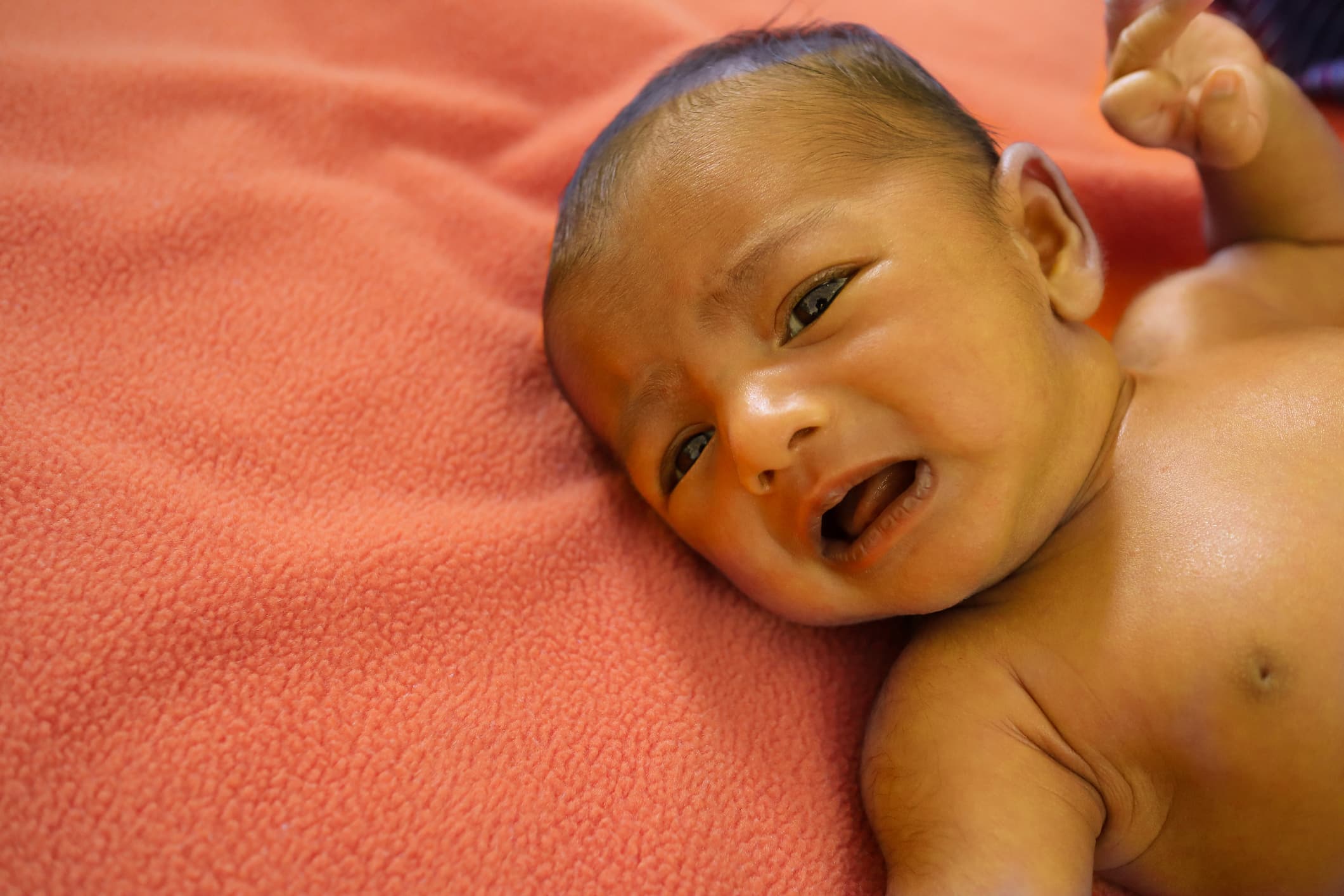
There are a lot of surprises that accompany the birth of a baby. Months are spent in preparation for feeds, nappies, and sleepless nights, yet many parents feel unprepared when their baby suddenly appears a bit yellow. At first glance, it can seem unexpected and scary, and, understandably, parents should be concerned.
This yellow colouring is often a sign of newborn baby jaundice. During the first week of a newborn's life, jaundice is quite usual, especially in healthy babies. It is mild and transitory in the majority of cases. Moreover, it typically resolves once the baby develops and their body builds greater tolerance to processing bilirubin.
Still, parents need to understand the symptoms of jaundice in newborn babies, what causes jaundice, and how healthcare teams monitor jaundice levels in newborns. Knowing what is normal can help parents feel calmer and more confident during those early newborn days.
Visible physical signs and symptoms of jaundice in newborns
Jaundice normally produces the yellow colour of the skin or eyes. This occurs due to the accumulation of bilirubin in the baby's blood. Bilirubin is a natural yellowish compound produced when the body breaks down old red blood cells. Infants generate bilirubin daily, but their liver is still underdeveloped. This implies that the body may fail to eliminate bilirubin as fast as it should initially.
Yellow skin colour
One of the first and most obvious symptoms of jaundice in newborn babies is yellow skin. This is a yellow colour which may begin on the face, particularly around the nose and cheeks. When the bilirubin increases, the colour can extend downwards to the chest, tummy, arms and legs.
Yellow colour in the eyes
The other typical symptom is the yellowing of the whites of the baby's eyes. This may be observed occasionally, even in instances where the colour change in the skin is mild. Yellow eyes are a strong clue that newborn baby jaundice may be present.
Sleepiness and feeding changes
Some infants with jaundice may appear sleepier than usual. They might have difficulty waking for feeds or may fall asleep during feeding. Since regular feeding helps the body eliminate bilirubin, ineffective or interrupted feeding can sometimes prolong jaundice.
Bilirubin is a natural yellowish compound produced when the body breaks down old red blood cells.
How medical professionals monitor jaundice levels in newborns
Healthcare teams monitor jaundice levels in newborns to make sure bilirubin stays within a safe range. Simple observation is all that is necessary in most cases of the babies, although monitoring helps to avoid severe jaundice. The level of bilirubin is regularly measured in newborns, as extremely high levels can cause complications if not treated.
Observation during the early days
During the initial days of birth, medical workers usually start with visual examinations. They examine the colour of the baby, his or her eye colour and overall alertness. Mainly, they enquire about feeding, wet nappies and stool patterns among others with parents. Due to the potential of jaundice to continue growing during the initial days, frequent monitoring is essential despite the baby appearing all right after delivery.
Mild level of bilirubin
In case jaundice is observed, clinicians can make estimates of the bilirubin through the forces. This can help them know whether the jaundice is mild or if they need closer attention. Parents should know that checking jaundice levels in newborns is a normal part of newborn care and does not automatically mean something is wrong.
Follow-up after leaving the hospital
The maximum intensity of jaundice may be at day three to five. According to the studies, babies need to be examined during this period, particularly when they are discharged shortly after birth. The follow-up appointments can be used to monitor bilirubin levels to ensure that they are decreasing as intended.
Common physiological and underlying causes of jaundice in newborns
The causes of jaundice in newborn babies are usually linked to normal newborn development. Newborns tend to produce more bilirubin due to a higher rate of red blood cell turnover, along with an immature liver that processes bilirubin more slowly. Jaundice is often part of the body's adjustment during the first days of life.
Normal development of the liver in a newborn
The most prevalent cause will be that the liver of the baby is immature. It is the liver that processes bilirubin and assists in the elimination of bilirubin in the body. During the initial week, it might not perform effectively at the beginning, and therefore, bilirubin accumulates in the meantime.
Feeding-related jaundice
During the initial days of life, certain infants might not take food well or even often. Feeding helps the baby clear bilirubin in the stool. Bilirubin may remain in the body when it takes a long time to establish feeding. There is a tendency to promote frequent feeding due to the natural bilirubin clearance supported by this feeding.
During the initial days of life, certain infants might not take food well or even often. Feeding helps the baby clear bilirubin in the stool.
Recognising symptoms of high jaundice levels and complications
The majority of jaundice is light, but parents ought to be aware of the consequences of increased bilirubin. These symptoms suggest that one should see a doctor as soon as possible.
Large yellow spreading all around
When the yellow colour turns darker or rapidly reaches the legs, it could indicate elevated bilirubin levels. This is what should constantly be verified by a health practitioner.
Restlessness and bad feeding
Babies experiencing elevated jaundice rates can prove extremely hard to rouse or even reject feeds. This may be an alarming symptom since feeding is critical to recovery.
Abnormal crying or change of behaviour
Constant crying, unexplained stiffness or movement alteration can be indicators of complications. These symptoms have to be taken to the practitioner.
Standard newborn jaundice treatment options
Most babies do not need treatment, but newborn jaundice treatment depends on bilirubin levels and the baby's age.
Increased feeding support
In the case of mild jaundice, the primary suggestion is commonly increased frequency of feeding. This assists the baby in remaining hydrated and helps the baby to eliminate the bilirubin in the stools.
Light-based care in a hospital
Hospital-centric light exposure might be necessary for some babies. This aids the body in digesting bilirubin so that it can be excreted easily. This is an effective technique.
Jaundice requires severe monitoring in hospitals
In case of excessive bilirubin levels, the babies might require more attention at the hospital until the levels have been reduced to safe levels. This makes sure that the baby is healthy and well supported.
In the case of mild jaundice, the primary suggestion is commonly increased frequency of feeding.
The final takeaway
Newborn jaundice can feel a little scary at first, mostly because parents do not expect their baby's skin to suddenly look yellowish, like they have picked up a warm glow overnight. The reassuring truth is that newborn baby jaundice is extremely common and, in most cases, completely temporary.
By recognising early symptoms of jaundice in newborn babies, understanding the normal causes of jaundice in newborn development, and knowing how professionals monitor jaundice levels in newborns, parents can feel much more confident.
Most babies improve quickly with time, frequent feeding, and simple monitoring. And before parents know it, the yellow tint fades away, leaving behind the usual newborn look, sleepy, adorable, and ready for the next cuddle.
Frequently Asked Questions
1. How do I know if my newborn has jaundice?
Parents can observe yellow skin colour or yellowing of the whites of the eyes. This is characteristic of jaundice in infants within the first week.
2. Can breastfeeding cause jaundice?
Breast milk is not a direct cause of jaundice. The duration of the jaundice can be prolonged in case feeding is not properly established. Constant feeding can be effective in lowering bilirubin naturally.
3. How many days does jaundice last in newborns?
Mild jaundice can be treated in one or two weeks. Most of the cases resolve without treatment. However, if the symptoms persist, it is advisable to consult a healthcare provider immediately.
Share Article