

 Medically Reviewed
Parenthood
When Do Babies Start Recognising Their Parents?
Mar 3, 2026
•5 min read
Share Article

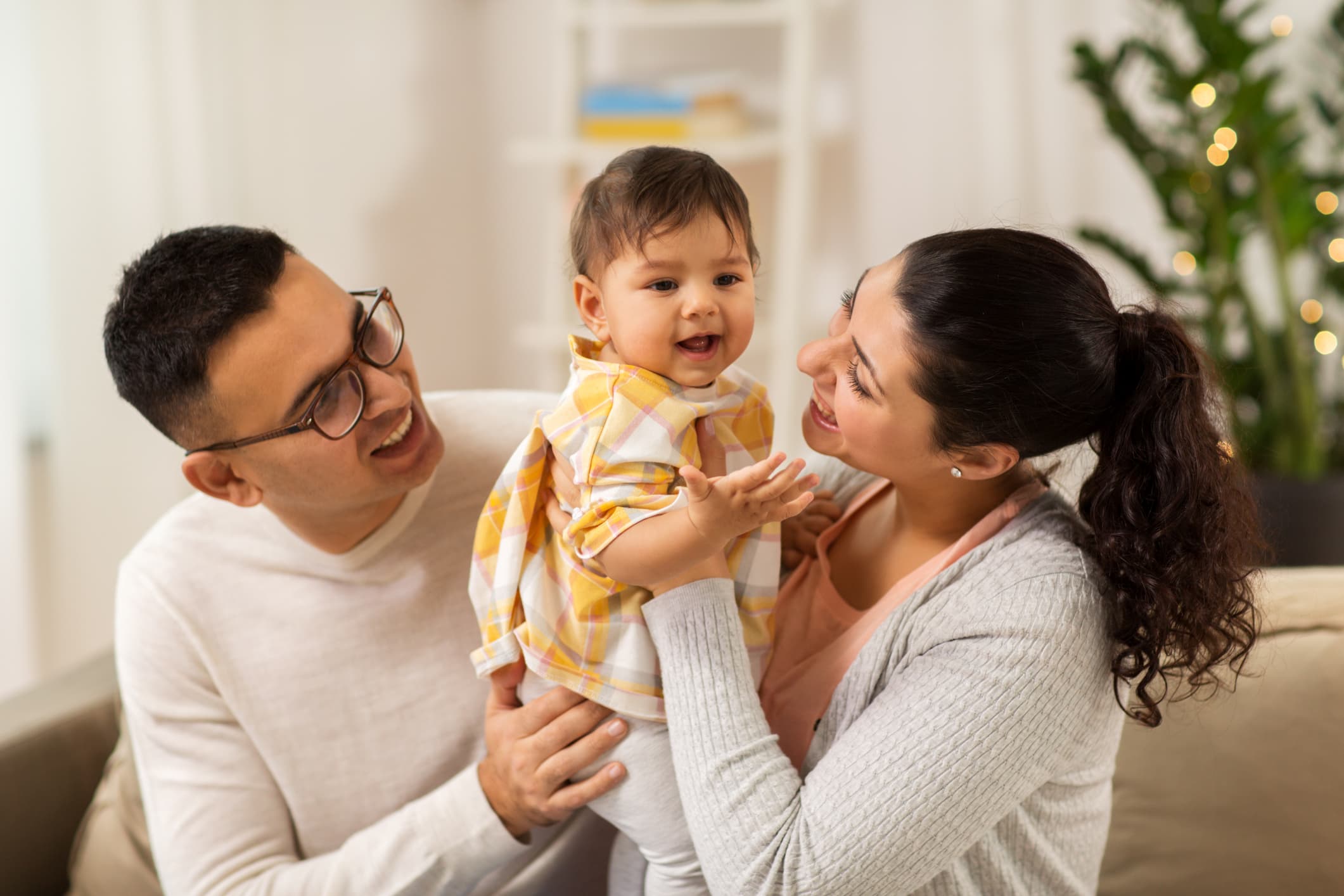
You’ve probably looked forward to parenthood for years, and now that your baby’s finally here, you can’t wait to start bonding. Of course, bonding with a newborn is quite different from what you might have imagined. You obviously can’t have deep conversations or even communicate non-verbally. However, this doesn’t mean that there’s no bonding and that your baby doesn’t know who you are. At this stage, close physical contact helps to strengthen parental bonds, but in time, your baby will also be able to recognise you and other family members using other senses, such as sight, as they develop.
How baby recognition develops in the early months
Newborns use all of their senses to recognise people as well as objects. This process begins from birth itself, but not all of the sensory organs are well developed at this time.
- Smell and taste: Newborns are highly sensitive to odours and tastes, primarily using scents for recognition.
- Touch: Babies are first exposed to cold, heat, and rough or hard textures only after leaving the womb, so they need soft, soothing contact.
- Hearing: This sense is well developed before birth, which is why newborns are very sensitive to sounds and hearing plays a vital role in recognition.
- Vision: This is the least developed sense at birth, and it takes a few weeks to develop better vision, which is at first blurred, light sensitive, and limited to a distance of just 12 inches.
When do babies start recognising faces?
Facial recognition requires higher development of the ocular senses or vision, which occurs rapidly through the first year. At birth, newborns have difficulty seeing beyond a foot and in bright light. Their central vision is poorly developed, which is why they mainly use peripheral vision and can appear to have their eyes crossed.
Within the first few weeks, retinal development improves, allowing for better perception of light, dark, colours, and shapes, as well as objects directly in front of them. By the first month, your baby should even show signs of focusing on you. However, brightly coloured objects are likely to be of greater interest as visual recognition is still developing.
Over the following two months, visual coordination improves significantly, allowing for better focus and vision as the eyes work together. By the fifth month, vision has developed far enough to enable better depth perception and colour vision, which helps with facial recognition. This is when you can expect your baby to recognise you from across a room just by sight.
Hearing is well developed before birth, which is why newborns are very sensitive to sounds.
When does a baby recognise father?
Recognition of fathers has been shown to depend on paternal involvement in both pregnancy and child care from birth. Fathers who are more engaged have stronger bonds and are more likely to be recognised early. Unborn babies can get attuned to the father’s voice in the womb itself, and will also learn to recognise their father’s body odour and touch soon after birth if there is adequate close contact. Visual recognition develops from the third to sixth months, at which time your baby will be able to recognise and call out to you from across a room.
Signs your baby recognises their parents
Here are some clear signs that your baby recognises you:
- More focused on gazing at you, rather than at other people.
- Signs of intense joy and smiling when you are visible after any time apart.
- Respond excitedly to any interaction with parents.
- Increased attention and reaction to the sound of your voices.
- Physical contact from parents, presence and voices are more comforting than others.
Studies clearly show that babies can recognise their mothers from the moment of birth, as they’ve already been exposed to their mother’s voice in utero or while in the womb.
Factors that influence when babies recognise parents
Aside from sensory development, there are other social and environmental factors that influence a baby’s ability to recognise parents. These include:
- Duration, frequency, and quality of contact with parents — the more time you spend attending to and fussing over your baby, the stronger the bonds and the ability to recognise you.
- Talking to your baby, even if it’s gibberish or "parentese," helps to strengthen voice recognition.
- Repeated and close exposure to your face during the first few months will help build facial recognition by three to four months.
- Focus on self-care and your mental health because research shows that the emotional well-being of parents directly influences the bonding experience and your baby’s learning.
How parents can help strengthen baby recognition
As a parent, you can take a few additional steps to strengthen your baby’s ability to recognise you. These include:
- Talking to your baby even during mundane everyday activities, whether changing diapers or washing.
- Maintaining close eye contact as far as possible and responding to your baby promptly, from your baby’s coos to their first words.
- Interactive play, with games like peek-a-boo, can also help build skills that strengthen and reinforce parental recognition.
- Consistent attention and cuddling, using baby slings when moving about, can also enhance bonding and recognition.
Talking to your baby, even if it’s gibberish or "parentese," helps to strengthen voice recognition.
When to be concerned about delayed recognition
Every baby is unique, and developmental milestones don’t occur on a precise timeline. Small delays should not cause any concern, but it would be a good idea to talk to your paediatrician in the following circumstances:
- Your newborn does not make much eye contact or show facial expressions and reactions to parental voices and faces by three months.
- If they don’t engage in cooing or gibberish baby talk by six months.
- If they consistently do not show any preferences for parents and caregivers as opposed to strangers.
Conclusion
Your baby is already learning who you are from day one through smell, touch, and sound, and their sight gradually becomes sharper over the first few months. With plenty of cuddles, chatter and close contact, recognition and stronger bonds naturally follow, with clear facial recognition developing soon after. Newborns grow up faster than you realize and you don’t want to miss out on any of those precious moments, so try to make the most of it without engaging in comparisons or expecting rigid adherence to a timetable.
Frequently Asked Questions
1. When do babies start recognising their parents?
Babies begin recognising parents from birth using smell, touch and hearing, while clear facial recognition develops over the first few months and usually becomes stronger by three to five months.
2. When does a baby recognise mom?
Newborns often recognise their mothers right from birth through her voice, body odour and the smell/taste of breast milk, with facial features becoming more recognisable by around three months.
3. When will a baby recognise the father?
Recognition of fathers depends on involvement and close contact. Babies can recognise a father’s voice and scent early, while visual recognition typically develops between three and six months.
Share Article