

 Medically Reviewed
Parenthood
When Do Babies Start Sitting?
May 27, 2026
•3 min read
Share Article

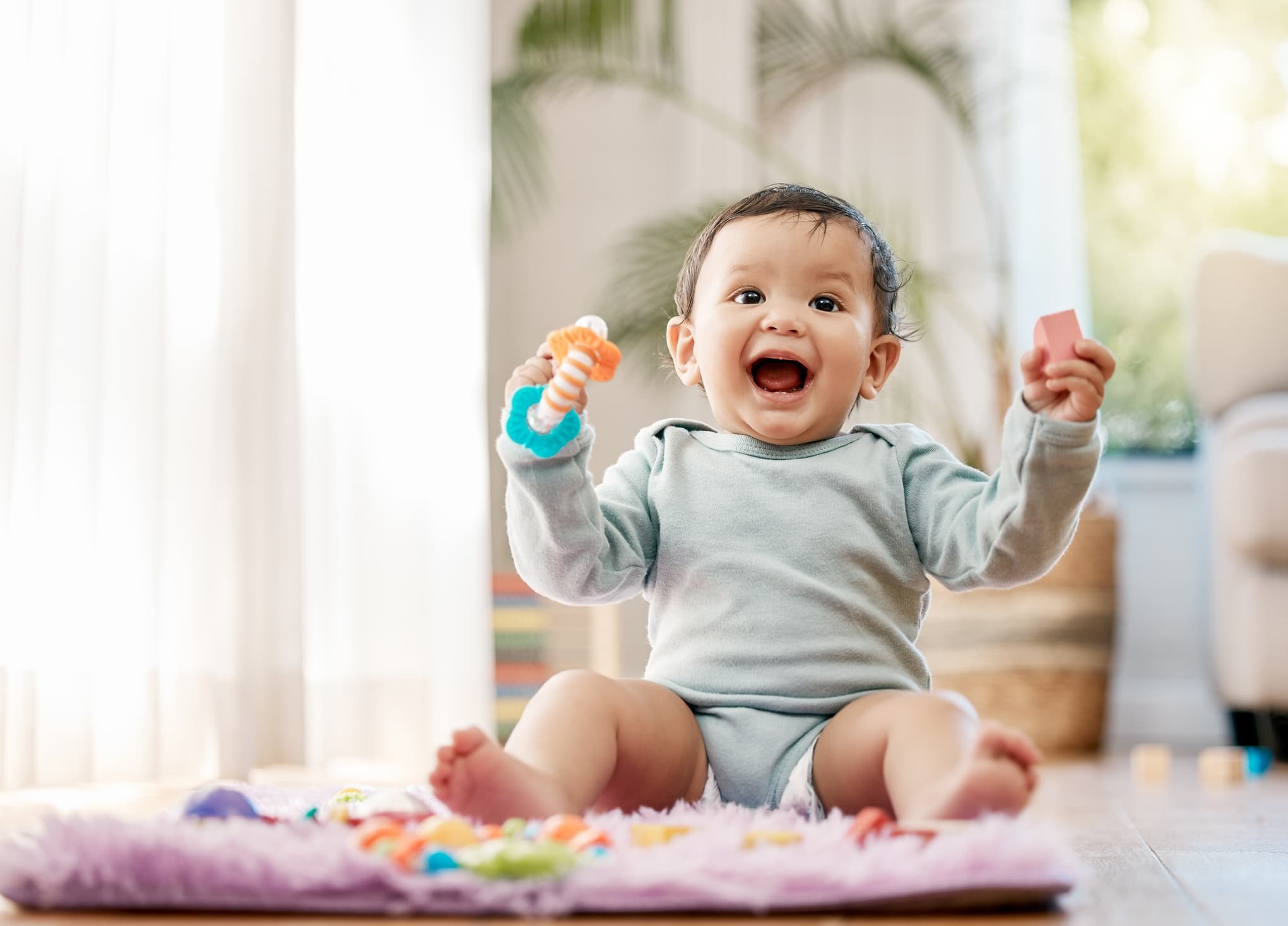
Babies grow incredibly fast, and learning to sit is one of the most exciting milestones for parents. From holding their head up to sitting independently, each stage reflects growing strength, balance, and curiosity about the world around them.
Babies gradually develop the neck, back, and core strength needed to stay upright. Most babies first learn to sit with support before eventually sitting on their own with better balance and control.
Because every baby develops at their own pace, the timeline can vary widely. Understanding when babies usually start sitting can help parents feel more confident and less anxious about development.
From what age can a baby sit with support?
Most babies begin sitting with support between 4 and 6 months of age. At this stage, they may not sit upright steadily on their own but can stay seated briefly with help from:
- A parent's hands
- Cushions or pillows placed safely around them
- A supported sitting position on the floor
By around 6 months, many babies can sit with minimal support and may briefly sit without leaning too much.
The average infant sits with some assistance at 4 to 6 months. However, it does not imply that he or she can sit upright like a little grown-up.
What does sitting "with support" actually look like?
Supported sitting usually means the baby can:
- Hold their head steady
- Sit upright for a few seconds with help
- Stay seated briefly before wobbling or toppling sideways
At this age, babies are still developing trunk strength, balance, and coordination.
Why does sitting take time?
Learning to sit requires babies to build strength in their neck, back, and core muscles. Skills like tummy time, rolling, and floor play gradually help them gain the balance needed to sit upright.
Each wobbly attempt is an important part of motor development and helps prepare babies for crawling, standing, and walking later on.
At what age do babies start sitting independently
Most babies begin sitting without support between 6 and 9 months. Some may sit independently as early as 6 months, while others take a little longer.
A baby who can sit independently may:
- Sit upright without support
- Use their hands to play with toys
- Turn their head without losing balance
- Stay seated for several minutes
Initially, babies often sit in a "tripod" position by leaning forward on their hands before mastering independent sitting.
Typical sitting timeline
- Around 6 months: Sits briefly but may topple
- Around 7 months: Sits steadily with hands free
- Around 8–9 months: Moves in and out of sitting independently
How to help your baby learn sitting
Parents can gently support sitting development through safe practice and play. Helpful ways include:
- Giving plenty of supervised tummy time
- Encouraging floor play and movement
- Practising supported sitting on a parent's lap or with cushions
- Using toys to encourage reaching and balance
- Keeping practice sessions short and fun
- Always supervising closely
When should parents seek advice?
Most babies sit independently by around 9 months. However, parents should speak to a paediatrician if:
- The baby seems very floppy or very stiff
- Head control is still poor after 6 months
- The baby cannot sit independently by 10 months
- There is little progress in overall motor development
Every baby develops differently, but discussing concerns early can provide reassurance and guidance.
Frequently Asked Questions
1. Can my baby start sitting at 3 months?
It is uncommon for babies to sit at 3 months. At this stage, most babies are still developing head and trunk control. Supported sitting usually begins between 4 and 6 months.
2. Do babies crawl first or sit first?
Most babies learn to sit before they start crawling. Sitting usually develops between 6 and 9 months, while crawling often comes later. Some babies may even skip crawling altogether.
3. What are the signs a baby is ready to sit?
Common signs include good head control, pushing up during tummy time, and trying to stay upright.
4. How can parents support sitting safely?
Parents can help by giving supervised tummy and floor time, practising supported sitting, encouraging reaching and turning movements, and using play activities that improve balance and coordination.
Sources:
Milestones by 9 Months | Learn the Signs. Act Early. | CDC
Development of upper body coordination during sitting in typically developing infants - PMC
Share Article