

 Clinically Reviewed
Parenthood
When Do Babies Start Teething? Comprehensive Guide for Parents
May 26, 2026
•5 min read
Share Article

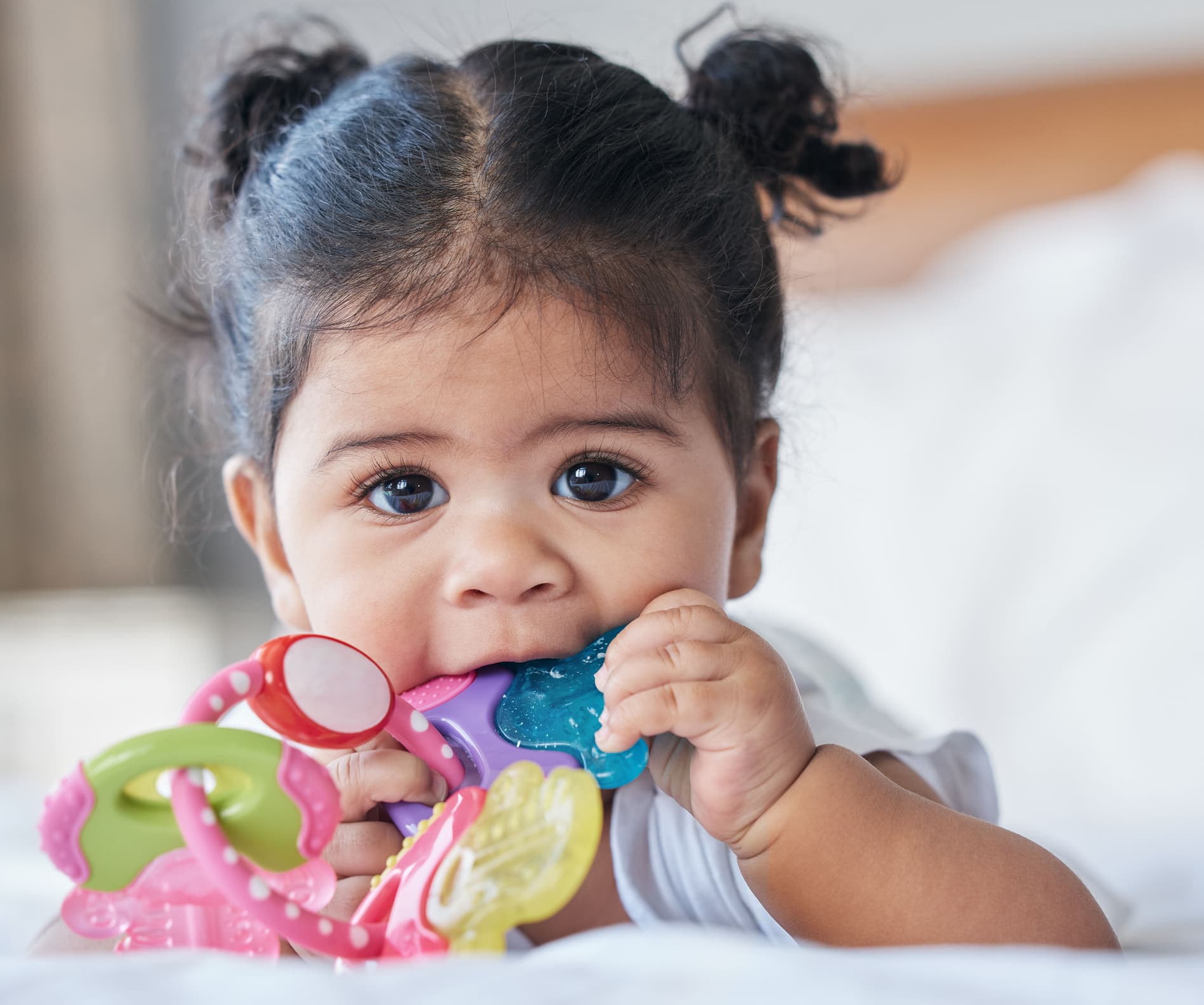
Teething is one such baby milestone that parents have heard all about, but even when it comes, it still seems somewhat mysterious. One day, the baby is entirely happy, and the following day, there is continuous drooling and chewing everything they can get their hands on. It is no surprise that so many parents find themselves wondering when babies start teething and how they will even recognise it.
Understanding the typical baby teething age, recognising common baby teething symptoms, and learning which baby teething remedies are safe can help parents feel more prepared and less overwhelmed.
Although teething can be very painful, it can be managed with a lot of tenderness. Meanwhile, the parents should be aware that teething alone might not be the cause of more serious symptoms. Early identification of potential teething issues in infants ensures they receive the support they need.
Understanding baby teething age and timelines
Teething timelines can vary, since all babies develop at different rates. Awareness of the approximate range makes parents feel better prepared.
- Typical teething start age
The first tooth in many babies is seen between the ages of roughly four and seven months. In most cases, teething will usually start around six months of age, but it can start earlier or later without the need to raise any concerns. The lower front teeth are the first to develop, then the upper front teeth. Teeth keep on coming out over time in a gradual manner, and the majority of children have all their baby teeth at the age of about three years. - Natural difference in the age of teething in a baby
The teething process is different for every baby. Genetics and development are also factors, meaning there are babies who exhibit signs at the early stage, whereas others may not have their first cut till after their first birthday. These two patterns can still be considered healthy.
Drooling and gnashing can start many weeks before the tooth surface shows, since the teeth are shifting under the gums. Even though all children are unique, baby teeth tend to form in a certain order. The first teeth to come are the front teeth, then the side teeth and molars. This is a process which takes time and involves on and off teething during the early years.
The first tooth in many babies is seen between the ages of roughly four and seven months.
Recognising common baby teething symptoms
The symptoms of teething may vary from child to child, though there are some general patterns. Early detection can help parents provide comfort.
- Drooling and chewing behaviours
One of the most noticeable baby teething symptoms is drooling. Infants can also suck on their hands, toys, and garments more than usual. This chewing aims at pressing sore gums, and it may be relaxing. Sore gums and drooling are normal; however, teething is not normally a severe illness.
- Mood and sleep disruption
Teething may cause irritability, clinginess, and disrupted sleep. Infants can sleep less frequently or require additional comfort. These modifications tend to be short-lived and get better after the tooth breaks through.
- Feeding and comfort changes
Other babies might feed more often to be reassured, whereas others may just protest against feeding momentarily since sucking can cause sore gums. These changes do not last long.
Identifying potential teething problems in babies
Most babies experience mild discomfort during teething. It is, however, useful to know when symptoms appear abnormal.
- Normal discomfort versus unusual symptoms
Most teething is uncomplicated, but teething problems in babies may occur if discomfort becomes excessive or symptoms seem more severe than expected. Teething does not cause serious symptoms and is normally accompanied by mild gum soreness and fussiness.
- When extra attention is needed
When a baby appears abnormally ill, in persistent pain, or exhibits symptoms that seem extreme, one should not think that the problem can be reduced to teething. Professional consultation ensures that the baby is adequately cared for.
Brushing teeth twice a day and avoiding sugary foods and beverages at night help keep teeth strong, as more teeth are coming in over time.
Safe and effective baby teething remedies
Pain in the teeth may be overcome by mild and non-hazardous pain relievers. Straussforward methods tend to be effective.
- Cooling and gum relief
Most safe baby teething remedies focus on soothing sore gums. Using chilled teething rings or gently rubbing the gums can provide relief. The cold pressure may help reduce inflammation and temporarily ease discomfort.
- Safe chewing support
During teething, babies will be chewing. Providing safe age-appropriate chewing toys will also fulfil this need and keep gums safe. Most babies can have their way with these basic solutions.
- Approaches to avoid
Unsafe home remedies or objects that can be dangerous to the child and cause them to choke or get hurt should be avoided. The comfort measures must never be harsh and beyond the age of the baby.
Using chilled teething rings or gently rubbing the gums can provide relief.
Caring for your baby's new teeth
As soon as the first tooth shows up, one starts taking care of their teeth. Early initiation will help maintain dental health.
- Early tooth care
|Public Health England recommends that brushing commence immediately when the teeth erupt. Baby teeth help with eating, speaking, and the posterior development of the teeth.
- Gentle brushing habits
The parents are supposed to brush the teeth using a soft baby toothbrush. It is better to introduce this habit early in life since babies get used to oral care as they mature.
- Long-term healthy routines
Brushing teeth twice a day and avoiding sugary foods and beverages at night help keep teeth strong, as more teeth are coming in over time.
Babies start teething at different times. Don’t worry
Teething is one of those baby stages that comes with plenty of drool, lots of chewing, and the occasional restless night. Knowing when babies start teething, recognising typical baby teething symptoms, and using gentle baby teething remedies can make the experience far easier for parents to manage.
Mild discomfort is normal, although it is also essential not to attribute all the symptoms to teething. Being mindful of potential infant teething issues is a sure way of making babies receive the appropriate assistance in case something does not feel right.
Using patience, comfort, and early tooth care, the teething process turns into yet another milestone in the developing process of a baby, although it may be a somewhat unclean milestone.
Frequently Asked Questions
1. What are the first signs of teething?
The initial symptoms are drooling, chewing, and slight irritation of the gum. These are the typical symptoms of teething in a baby that may manifest even before the tooth can be seen.
2. Can a 3-month-old be teething?
Yes, it is possible. Though uncommon, some babies exhibit early symptoms at three months. The age of baby teething varies widely among children.
3. What is the normal age to start teething?
The average age of the babies who start teething is six months, though it can be four to seven months. That is why parents usually ask when babies begin to teethe because every baby has his/her own schedule.
Share Article