

 Medically Reviewed
Female Reproductive Health
7 Beginner-Friendly Exercises for Endometriosis Relief
Jun 2, 2026
•6 min read
Share Article

Some days, endometriosis has a way of taking over completely, making even the thought of moving feel exhausting. And yet, movement can also be surprisingly powerful. The right kind of gentle motion can ease tension, lighten your body, and make daily life a little more manageable. This is not about punishing workouts or unrealistic promises. It is about listening to your body and moving with it — slow, soothing, and encouraging exercises that work with your rhythm, not against it.
In this blog, we explore simple, effective exercises for endometriosis that can help reduce discomfort, improve circulation, and even boost your mood, showing that a little movement can go a long way.
What are the best exercises for endometriosis?
The exercises that work best are those that aim at reducing tension rather than aggravating pain. Light and gentle movements aid circulation, relax stiffened muscles, and help the pelvic area without imposing further stress.
Walking, stretching, and yoga are widely recommended for their flexibility and simplicity. These movements may also assist in decreasing fatigue and enhancing mood, which can indirectly influence pain experience.
Research suggests that regular exercise may have a beneficial effect on chronic pain and quality of life. It is consistency, not intensity, that matters most.
Slow and controlled movements are best for those managing endometriosis. Sudden or vigorous activity can worsen pain — always be guided by the principle of comfort and control.
Seven exercises for endometriosis
Exercise is among the most accessible ways to support the body. It assists in relieving muscle tightness, enhancing flexibility, and alleviating pressure around the pelvic region. Always consult your doctor before starting a new exercise routine, especially if your symptoms are severe.
Seven exercises for endometriosis
Exercise is among the most accessible ways to support the body. It assists in relieving the tightness in the muscles, enhances flexibility and alleviates the pressure around the pelvic region.
1. Standing hip flexor stretch
This stretch helps open the back of the hips, which tend to be tight from sitting in one position or straining the pelvis. The tight hip flexors may drag the lower back and pelvis, causing more pain. By gently stretching this area, the body experiences less strain, making it a valuable addition to endometriosis yoga exercise routines.
2, Transverse abdominis activation
This is an activity that targets deep abdominal muscles, which hold the spine and pelvis. This motion is gentle and regulated, unlike the normal abdominal movements. These muscles can be strengthened to assist in decreasing the strains in the course of daily tasks and enable a favourable posture, particularly when undertaking the exercises aimed at managing endometriosis or endometriotic cysts.
3. Diaphragmatic breathing
This is a method of slow and deep breathing which fills the abdomen. It assists in the relaxation of the pelvic floor and the nervous system. It is normally incorporated in the endometriosis yoga exercises since it minimises tension and creates a feeling of relaxation in the body.
4. Child’s pose
In this position, the body is able to rest, while gently stretching the lower back, hips, and thighs. It encourages deep, mindful breathing, which promotes relaxation and helps reduce tension and discomfort in the pelvic region. Practising it regularly can also relieve fatigue and calm the nervous system, supporting overall stress management, which is important for managing endometriosis symptoms.
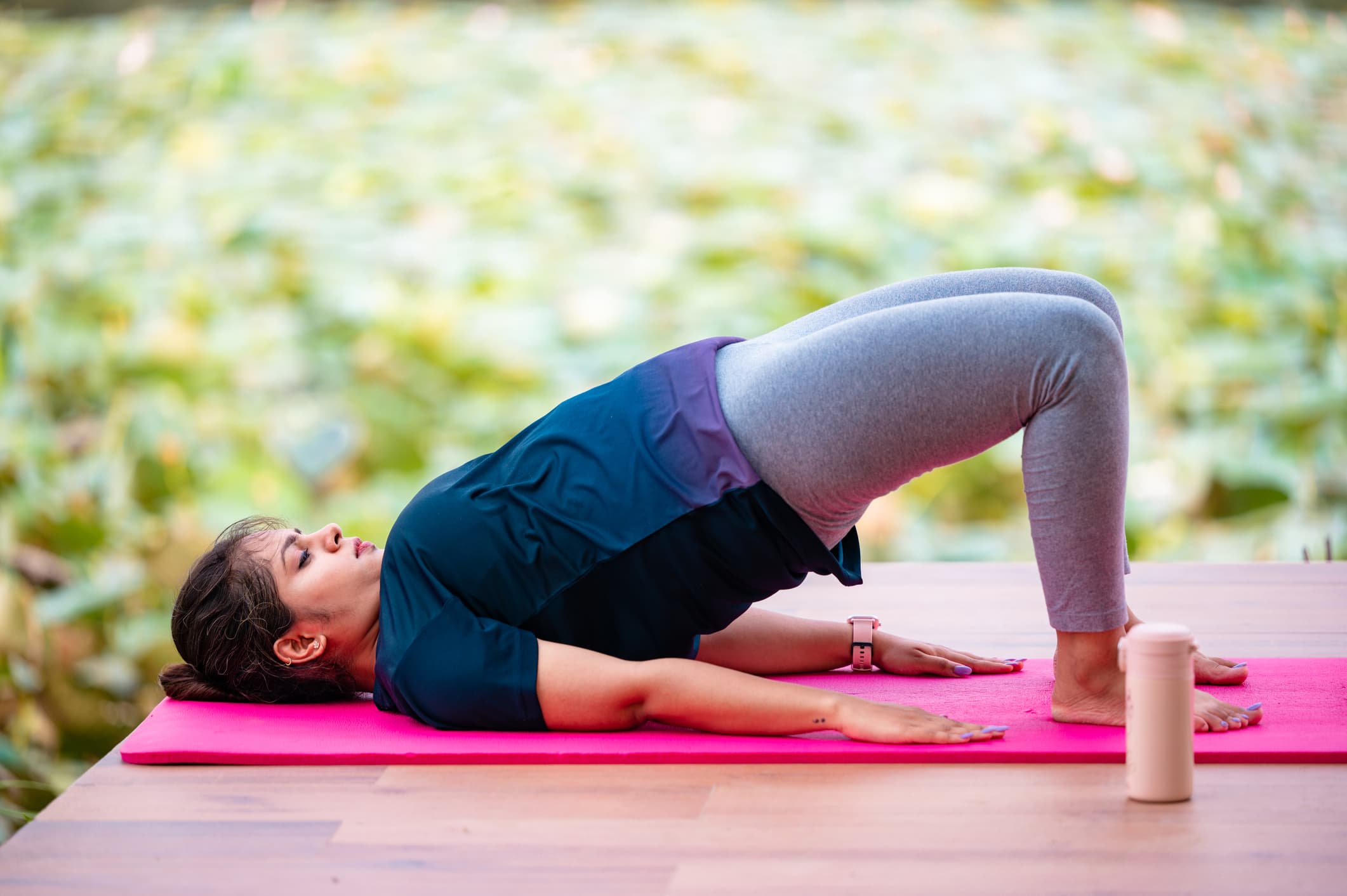
5. Bridge pose
This pose strengthens the lower back, glutes, and core muscles, while improving pelvic stability. Opening the chest and hip flexors enhances circulation to the pelvic area, which may help reduce cramping and inflammation. It also encourages better posture and spine alignment, easing pressure on the lower back often associated with endometriosis pain.
6. Clamshell pose
A light-impact exercise, the clamshell targets the hip abductors and gluteal muscles, improving hip alignment and stability. It supports pelvic balance and reduces strain on surrounding muscles, which can help alleviate discomfort from endometriosis or endometriotic cysts. Incorporating clamshells into a regular routine can also improve core stability and overall lower-body strength without placing excessive stress on the joints.
8. Aerobic exercises
Aerobic exercises do not necessarily imply strenuous exercises. Light exercise, such as walking, swimming, or cycling, can be of considerable benefit without a heavy workload on the organism.
These exercises:
- Improve circulation
- Boost mood
- Support energy levels
These exercises also stimulate the release of natural chemicals that can enhance mood and alleviate pain.
Light exercise such as walking, swimming, or cycling can be of considerable benefit — without placing a heavy workload on the body.
Exercises to avoid with endometriosis
While exercise can help manage endometriosis symptoms, some movements may actually worsen discomfort. Knowing which exercises to avoid can help prevent flare-ups and reduce strain on the body.
High-intensity workouts, heavy weightlifting, and intense core exercises can put extra pressure on the pelvic area, which may increase pain and cramping. Similarly, rapid or jerky movements can strain already sensitive muscles and tissues. Listening to your body and choosing gentler, low-impact forms of movement is often a better approach during painful phases.
Building a routine that supports healing rather than setbacks starts with understanding your body’s limits — and honouring them.
When it comes to endometriosis and exercise, the goal is not to push through pain — it is to move in a way that feels good and supports your body.
Finding relief through movement
Exercise with endometriosis is not about pushing through pain or testing your limits — it is about understanding what your body needs on a given day. Gentle movement practices such as yoga, stretching, mindfulness-based exercises, and low-impact strengthening workouts may help ease pain, reduce stiffness, and support overall well-being. At the same time, knowing which exercises to avoid is equally important to prevent unnecessary strain and flare-ups. Even small, consistent steps can make a meaningful difference over time.
Frequently asked questions
1. Can exercise help endometriosis pain?
Yes, gentle physical activity may help manage endometriosis symptoms by improving circulation, easing muscle tension, and calming the nervous system. Practices such as stretching and yoga may help reduce pain and improve overall comfort. The key is to stay consistent while avoiding movements that push the body too hard — balance and moderation are often more helpful for long-term relief. Always speak with your doctor about what level of activity is right for you.
2. What exercise is good for endometriosis?
Simple, low-impact exercises such as walking, stretching, and yoga are often considered some of the most suitable forms of movement. They can help improve flexibility, reduce stiffness, and promote relaxation, all while putting minimal strain on the pelvic area.
3. Is lifting heavy weights bad for endometriosis?
Heavy weightlifting may not be suitable for those with endometriosis, as it can increase pressure on the pelvic area and worsen pain or discomfort. For some women, it may even trigger symptom flare-ups, especially during certain phases of the menstrual cycle. Opting for lighter movements with slower, more controlled pacing is generally a safer approach — but do check with your doctor.
4. Is jogging good for endometriosis?
Jogging may feel too high-impact for some people with endometriosis, especially at a fast pace. Gentler forms of movement like yoga, stretching, or slow-paced walks may be more comfortable while still helping the body stay active and flexible.
5. How can gentle movement help with endometriosis pain?
Gentle movement, relaxation techniques, and deep breathing may help ease endometriosis-related pain and discomfort. Yoga, in particular, can help release tension, improve circulation, and calm the nervous system, which may reduce the likelihood of flare-ups and support overall comfort and well-being.
Share Article


