

 Medically Reviewed
Bone & Joint Health
8 Standing Desk Benefits Backed by Research
Mar 5, 2026
•6 min read
Share Article

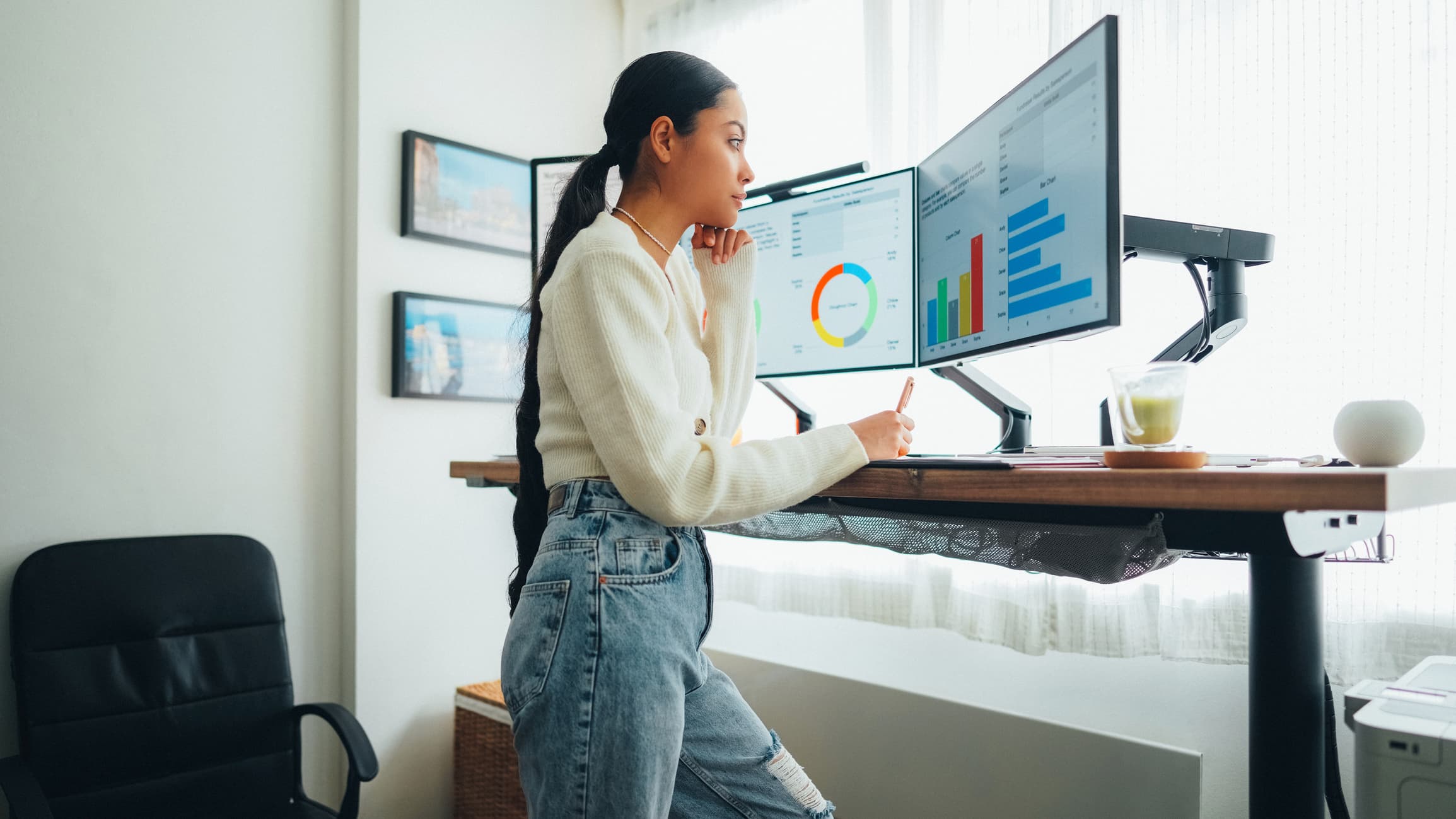
Sitting for long periods isn’t doing your body any good, and that’s no surprise. Muscles that once helped you move freely become inactive, while your joints stiffen from staying in the same position. The real problem is how gradually it happens: there’s no sudden pain, just a slow build-up of aches and discomfort over time.
That’s exactly why chats about standing desk benefits keep popping up. People aren’t looking for a miraculous health fix, just a sensible way to feel a bit better at work without turning their whole routine upside down. Research backs this up, too; standing desks aren’t hailed as a cure-all, but rather a helpful nudge towards adding a bit more movement into an otherwise chair-bound day.
The hidden health risks of prolonged sitting
Prolonged sitting may have an impact on the body, which isn’t obviously easy to notice at a given moment. Public health institutions have reported that in cases where one sits most of the time, the body loses a lot of muscle activity, especially in the legs and the core. This loss implies that the body needs fewer muscles that aid in maintaining position and sustaining blood flow.
The other problem is pressure distribution. Sitting places a concentration load on the lower spine and hips, particularly in cases when posture slowly folds forward. Such repeated stress may eventually result in rigidity and pain that continue even after work hours. The circulation is also influenced, where the blood flow in the lower body is lowered when the joints are kept bent for a long time.
Such risks do not only affect inactive individuals. The effects of sitting down during working hours may also be felt by people who might engage in movements every day, even when they are not working.
Public health institutions have reported that in cases where one sits most of the time, the body loses a lot of muscle activity, especially in the legs and the core.
8 standing desk benefits for health
Standing desks are best understood as tools that encourage movement rather than replacements for sitting. Research shows their greatest impact comes from reducing prolonged stillness and supporting healthier work patterns over time.
1. Reduced uninterrupted sitting
Studies consistently show that adjustable workstations reduce the amount of time people spend sitting without breaks. This matters because continuous sitting places constant pressure on the same muscles and joints. By interrupting this pattern, tissues are given regular opportunities to recover, which forms one of the core standing desk benefits.
2. Greater posture awareness
Standing naturally encourages you to be more mindful of how you hold your body. When you’re upright, your muscles remain lightly engaged to keep you balanced, which helps support better blood circulation and oxygen flow. This subtle activity often makes people more aware of their posture, reducing the tendency to slump or hunch over a screen.
3. Increased alertness during work
When one is standing upright, the muscles stay gently active, which helps blood flow and oxygen move around the body more easily. Many people say this makes them feel more mentally switched on. It’s not a dramatic change, but it can help take the edge off that familiar mid-afternoon slump that often comes from sitting down for too long.
4. Less upper-body discomfort
Occupational health research indicates that alternating positions throughout the day reduces strain in the neck and shoulders. Standing encourages varied arm and shoulder positioning, preventing repetitive loading that often builds up during extended screen work. This is a practical benefit of standing while working.
5. Better circulation of the lower body
Standing enables the hips and knees to be in a straight position, which facilitates the efficient circulation of blood in the legs. This will make the sitting-down experience of many individuals heavy and stiff after being seated for a long time, and thus, one of the obvious benefits of a standing desk.
6. Slight high active state of body
Standing involves more muscle involvement than sitting, despite the slight movement. It is a slight difference, but it leads to an improvement in the total energy levels of daily activity, keeping the body in a continuous state of energy production and helps to sustain healthier patterns of movement over time, another demonstration of the significance of standing desks.
7. Promotion of natural movement patterns
Standing makes it easier to stretch, shift weight, or take short walking breaks. These micro-movements help prevent rigidity and reinforce habits that support long-term comfort, strengthening the everyday stand-up desk benefits.
8. Encouraging long-term work comfort
The most impactful change is often behavioural. Standing workstations act as reminders to change position regularly, helping people move away from autopilot working habits. Over time, this supports sustainable routines and reinforces the broader advantages of a standing desk.
When one is standing upright, the muscles stay gently active, which helps blood flow and oxygen move around the body more easily.
How to use a standing desk correctly (ergonomics and duration)
Studies underline the fact that the use of a standing desk is of greater importance than its frequency. Switching positions two times in 30-60 mins enables the body to enjoy diversity without getting tired. Spending much time standing in one position may put undue stress on the lower limbs.
The desk level should be suitable so as to provide relaxed shoulders and neutral positioning of arms. The screens that are set too low or too high will strain the neck in the long run. The posture of the standing should not be rigid, and slight movements should be promoted. Even brisk walks and stretching help keep me comfortable throughout the day.
Switching positions two times in 30-60 mins enables the body to enjoy diversity without getting tired.
Who should consider switching to a standing desk?
Adjustable desks can be of great use to those people who spend the majority of their working time sitting. Individuals who have difficulties in recalling the movement breaks usually enjoy environmental cues that bring change. Standing desks are also known to help those who are interested in gradual changes instead of drastic changes in their lives.
Nevertheless, comfort must be used as a guide. Slow introduction enables the body to get accustomed to it, and fatigue or discomfort is unlikely to occur.
Conclusion: Are standing desks worth it for your health?
Standing desks are conceptualised as instruments, but not solutions. Their usefulness is in facilitating increased movement and reduced sitting times for people. They facilitate comfort, awareness, and healthier work routines when put to flexible use and combined with frequent movement. The truth of the matter is that the body should embrace change, and standing desks provide a viable measure of developing change in the workplace.
Frequently Asked Questions
1. Are standing desks health-promoting?
Standing desks will promote a healthier lifestyle because one does not sit for a prolonged period or be seated all day. Nevertheless, they should be used in combination with a balanced routine that involves frequent movement and change of posture. Spending long hours of life in a motionless position does not cause the same effects.
2. What is the duration of time one should remain standing at work?
One of the studies recommends alternating sitting and standing every 30 minutes. This will aid in relieving stress, aid circulation, and avoid exhaustion, which may occur due to restricting oneself to a single position for too long during work.
3. Are standing desks able to decrease work-related discomfort?
When properly used, standing desks can be used to alleviate neck, shoulder, and back pain. Their functionality is achieved through appropriate installation, timely utilisation and frequent rotation of position instead of standing or sitting in fixed postures throughout the day.
Sources:
Share Article