

 Medically Reviewed
General Health
Detecting Early Illness Through Smart Symptom Tracking
Feb 2, 2026
•6 min read
Share Article

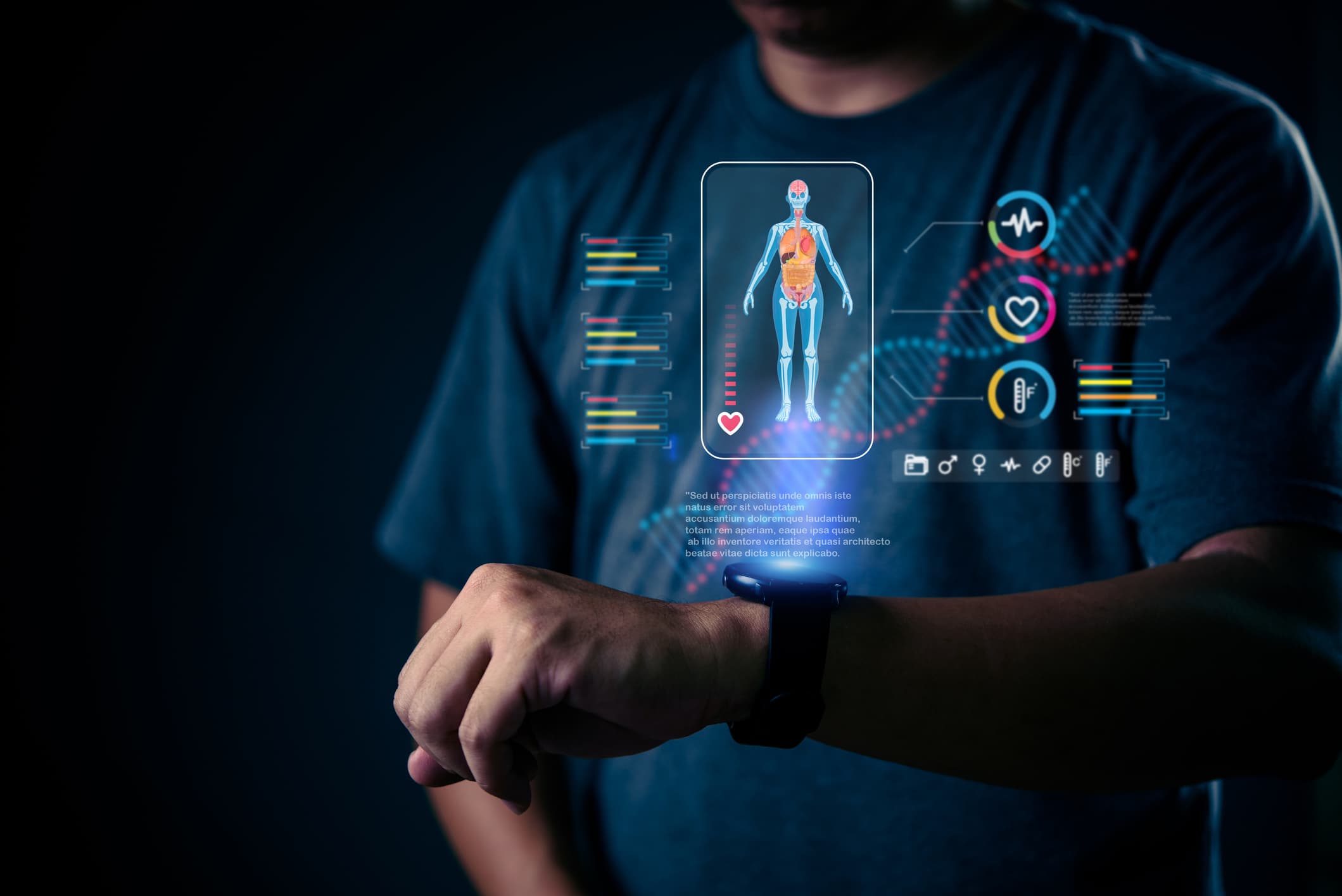
Early disease diagnosis is a crucial part of long-term and preventive health. Most health disorders are progressive in nature and have their subtle symptoms well in advance before a more apparent disturbance develops. These early signs are usually ignored without any regular check. This is where symptom tracking becomes more and more useful. The transformation in physical, emotional, and behavioural changes can also be documented with time to allow individuals to have valuable insights concerning patterns that might be indicative of underlying health issues.
This guide examines why symptom tracking is important, why digital symptom-tracking applications are valuable for early diagnostics, and why manual journaling can provide valuable insights. These measures combined help to promote knowledgeable health awareness and better choices.
Symptom tracking: Why does it matter?
Constant monitoring of symptoms would enable the detection of subtle changes before they become too complex. Most of the long-term diseases develop gradually with symptoms that are simple to overlook as normal fluctuations. Recurrent patterns are identified when tracking symptoms over time, and they could otherwise have been overlooked.
According to public health research, earlier identification of changes in energy levels, sleep quality, digestion, or mood could lead to earlier intervention and improved outcomes. Tracking also enhances communication with healthcare professionals by providing well-organised, precise histories, rather than relying on memory alone.
Notably, the process of symptom tracking promotes personal health and active activity. Rather than responding when something goes wrong and making it inconvenient, one turns into an observer of their well-being. This preemptive attitude helps in the prevention, awareness, and well-informed lifestyle change in line with long-term health objectives.
Most health disorders are progressive in nature and have their subtle symptoms well in advance before a more apparent disturbance develops.
Using a digital symptom tracker for early detection
Digital symptom trackers help record observations on a daily basis, eliminating the use of memory and guesswork and allowing the formation of structured records that can indicate minor symptom changes that become significant in identifying patterns of early health changes over time. Digital tools do more than organise data; they also enhance accuracy and user compliance compared with traditional methods. This advantage has been observed in conditions such as Parkinson’s disease, where digital diaries have reduced recall bias and are closely aligned with clinical observations.
- Automated visual summaries assist users in identifying trends, frequency, and duration of symptoms, making it less complicated to notice a gradual change that may indicate the occurrence of developing issues before they become a significant issue in daily functioning.
- Online sites enable the review of information over weeks or months and assist users and professionals in identifying the correlations of symptoms with lifestyle aspects that help to better understand the health changes.
- Secure digital records enhance continuity, which enables long-term symptom history to be kept accurately, which enhances awareness that personal baselines and deviations are easier to detect at an early stage and do so consistently.
Symptom tracker journal: Manual tracking for better insights
Instead of using a high-tech method of health change recording, a symptom tracker journal is a low-tech yet effective alternative. Handwriting helps to reflect and be detailed, and enables the description of symptoms in a personal language instead of selecting standardised categories.
Manual journaling contributes to awareness by making the process of observation slow. When writing without restrictions, people tend to observe emotional or environmental aspects in a better manner. Research on reflective writing demonstrates that journaling enhances self-awareness and identification of regular patterns.
This method would be especially handy to people who value seclusion or ease. A symptom tracker journal can be tailored to have notes about day-to-day activities, moods, and external factors. With time, a review becomes helpful in identifying patterns that cannot be seen in day-to-day business, which can support the importance of manual-based tracking.
Handwriting helps to reflect and be detailed, and enables the description of symptoms in a personal language instead of selecting standardised categories.
How manual journaling enhances awareness
The manual tracking enhances the recollection and helps to be more engaged with the everyday experience of health. It has context-driven entries that can capture the nuance beyond the simple symptom lists.
Symptom diary: Daily logging for health awareness
A symptom diary is geared towards regular daily entries that record physical sensations, emotional changes and functional changes. In comparison to infrequent taking of notes, a diary is more focused on routine, which is critical in detecting slow developments.
Journalling daily assists in distinguishing between the isolated and recurrent discomfort. Public health recommendations provide that regularity is instrumental in identifying trends, which can be used to identify emerging issues. A diary is also beneficial to emotional well-being by offering a systematic reflection platform.
They do not have to be long entries. Short notes that come frequently are sometimes more effective than long, detailed notes that are sporadic. The record that is built up over weeks or months becomes a useful point of reference in how symptoms change and relate to the usual way of life.
Combining symptom tracking with day-in-day-out activities like morning reflection or evening wind-down enhances compliance.
Daily symptom tracker: Making tracking a habit
A symptom tracker can only be successful when it is habitual. Consistency turns the individual observations into significant datasets. Having a routine makes it easier to be accurate and eliminates forgetfulness.
Behavioural research indicates that habituation developed in relation to the current practices is more apt to stick. Combining tracking with day-in-day-out activities like morning reflection or evening wind-down enhances compliance. Complexity also has its bearing; too complicated systems do not encourage long-term utilisation.
Early detection is facilitated through habitual tracking, which ensures that changes are noted as they are observed. This regularity, over time, forms a credible individual health history, enabling people to become more suspicious of deviations from their usual norm.
Summary and key takeaways for effective symptom tracking
Best practice in symptom tracking journals is one that is consistent, aware and reflective. Tracking, whether digitised or not, converts daily experiences into significant insights into health. The digital symptom tracker aids can be more structured and visualised, whereas the manual strategies have more depth and personal context. Clinical findings further show high adherence to end-of-day digital diaries, indicating that consistent logging over weeks or even months is both feasible and well accepted.
The main lessons are that it follows a routine every day, logs should be simple, and captured trends should be reviewed regularly. Tracking assists in early detection by highlighting the slightest changes before they become disruptive. It also helps people to become proactive in regard to their own well-being.
Daily symptom tracker practices can be adopted as a long-term routine and not a short-term one by adhering to the approach that would suit one and their lifestyle. This eventually aids in informed health consciousness and long-term preventive measures.
Frequently Asked Questions
1. What is the primary advantage of symptom tracking?
The primary advantage is the earliness in identifying changes that can be grounds for raising concern regarding health issues. Regular monitoring of the symptoms makes it easy to identify certain patterns that cannot be easily noticed in normal life.
2. Which symptoms should be managed and within which period of time?
Patterns frequently become apparent when the logging is continued over a number of weeks. Extended durations give a better understanding of any recurrent trends and triggers.
3. Is digital tracking better than manual journalling?
Neither is universally good. Digital symptom tracker systems provide structure and visual patterns, whereas a symptom tracker journal promotes reflection and elaborated personal context.
Share Article