
 Medically Reviewed
Caregiving
Fall Prevention at Home: Safety Checklist for Seniors
Feb 2, 2026
•6 min read
Share Article

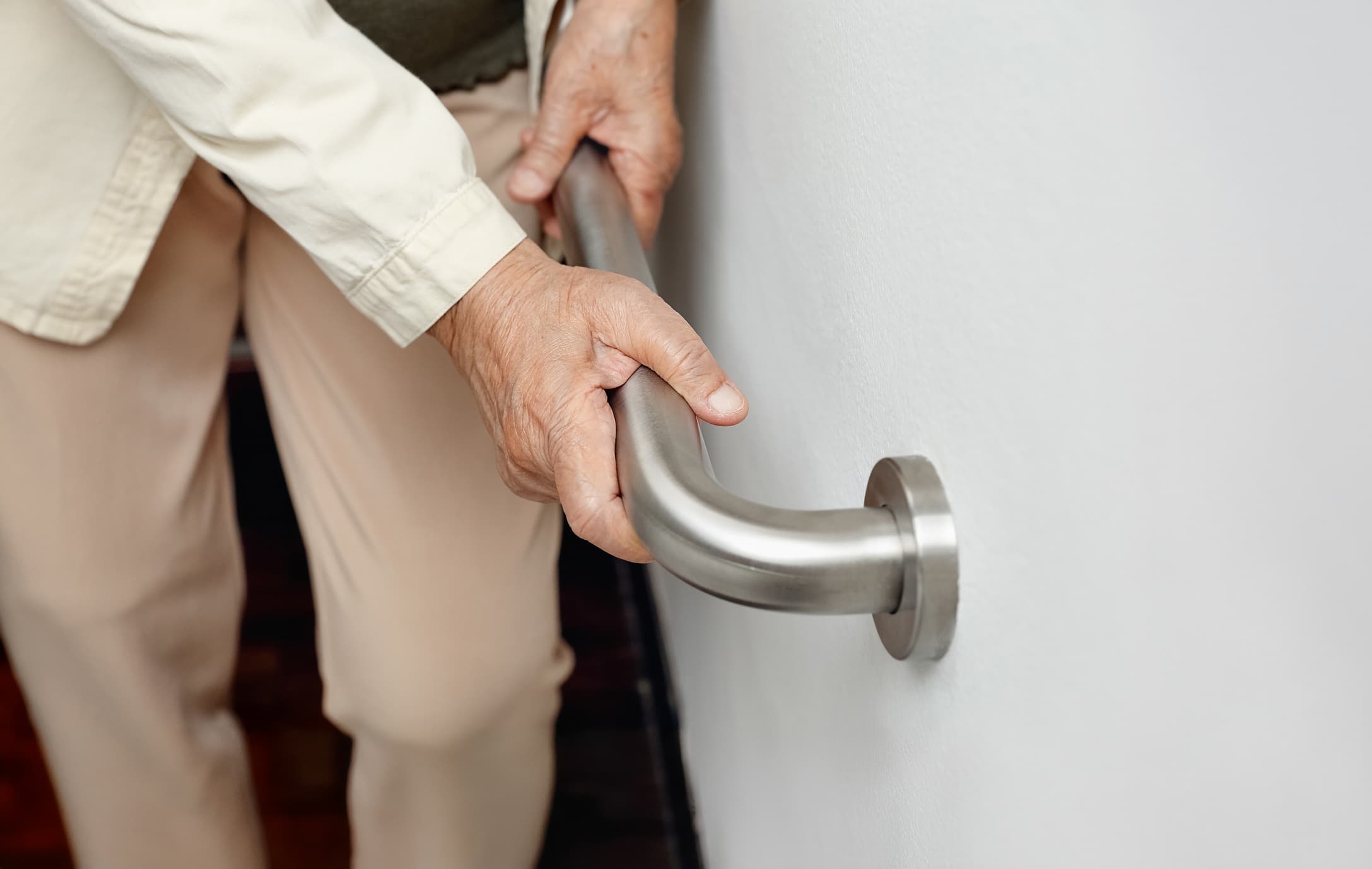
Later-life falls are seldom the result of a single error. They occur when age-related physical changes combine with environments and daily habits that demand greater balance, strength, or reaction speed than the body provides. Research on fall prevention at home consistently shows that the most effective outcomes are achieved through organised, structured approaches. These strategies focus on risks identified during everyday movement and routine behaviour.
In this blog, we will examine each area of prevention in detail, explaining how specific risks arise and how targeted strategies support effective fall prevention for seniors by reducing hazards and improving movement safety.
Why does fall prevention for seniors matter?
Ageing affects systems involved in balance control. There is progressive loss of muscle strength, decreased joint flexibility, and reduced reaction time. With these changes, the capacity to correct posture during balance disruption diminishes. Therefore, falls due to minor issues occur more frequently.
Most of the elders modify their gait after falling. They could walk more carefully, move less or stay off some parts of the house, which is an ideal practice for fall prevention for seniors. Even though such changes are protective, they tend to decrease muscle activity and efficiency. Elderly fall prevention helps avoid such a cycle by minimising risks before confidence is affected.
Ageing affects systems involved in balance control. There is progressive loss of muscle strength, decreased joint flexibility, and reduced reaction time.
Home safety for seniors: Start with a home hazard assessment?
A hazard assessment involves applying the home to routine activities. Home safety for seniors is enhanced by adapting the environment to their current movement capabilities, rather than to their former ones.
Walking pathways and circulation routes
The most prevalent places where falls occur are walking routes due to their frequent use and, in most instances, unconsciously. Slim aisles, debris, hanging cords or uneven floors interrupt walking pace and heighten the risk of stumbling. By making the paths easier to navigate, one can move naturally and steadily without the abrupt demands of balance.
Sitting and standing transition areas
The most frequent falls occur in the form of standing up and sitting down. Unstable surfaces provide less support, whereas very low or very high seating requires more effort. Strength, coordination and balance are needed simultaneously in these transitions for fall prevention for seniors. Enhancing stability in such areas minimises tension and promotes a check.
Reach and storage locations
When bending low or reaching overhead, the body's centre of gravity shifts. This shift can lead to instability in case balance responses are slow. Quick tips for preventing falls in the elderly include ensuring that frequently used furniture is at a comfortable height, reducing the need to stretch or bend and lowering the risk of falls.
Slim aisles, debris, hanging cords or uneven floors interrupt walking pace and heighten the risk of stumbling.
Improve lighting and visibility: Key to fall prevention at home
Vision provides essential data about surfaces, obstacles, and depth. Old age increases the risk of visual impairments, which complicate the ability to perceive edges and changes in level, especially in low-light conditions.
Consistency of lighting
Sudden transitions between light and dark slow visual adaptation. During this latency, depth perception decreases, making it more likely to misjudge steps or stumble over hazards. Consistent, well-distributed lighting allows the eyes to adapt smoothly and plays an important role in fall prevention at home by reducing visual uncertainty during everyday movement.
Shadow and glare management
Shadows can conceal dangers, whereas glare can conceal significant objects of sight. Both disrupt the proper alignment of the feet. The decrease of such visual distortions enhances confidence and accuracy of movements.
Bathroom and stair safety: High-risk zones for elderly falls
The combination of tight spaces, clean, non-porous surfaces, and the need to move positions frequently are characteristics of a bathroom. Such aspects augment the demand for balance, making them very dangerous.
Sequences of standing and turning
The motions, standing up, turning, and stepping, take place quickly and closely. Such sequences are against coordination and strength. Assistance with order movement in such actions minimises the risk of falls.
Surface traction and moisture control
Less friction on smooth surfaces increases the likelihood of slips. Stable, clean environments aid in the prevention of falls in geriatric patients in their day-to-day activities.
Stair navigation and ageing
The use of stairs involves a lot of accuracy in coordination, timing and visualisation. These demands are more challenging to fulfil as one ages.
Step-edge visibility
Obviously, visual contrast on the edges of the steps enhances depth perception and accuracy in foot placement, decreasing missteps.
The constant assistance when using stairs
Continuous support gives a sense of stability during movements up and downstairs. Lack of support predisposes the occurrence of a balance disturbance.
Consistent, well-distributed lighting allows the eyes to adapt smoothly and plays an important role in fall prevention at home.
Proper footwear and household habits for elderly fall prevention
Shoes influence ground sensory feedback, alignment, and posture. Unsupportive footwear reduces awareness of balance, whereas stable footwear increases control and supports fall-prevention for the elderly.
- Rushing daily activities
Running is faster, which shortens the time available to correct balance. Slower, more methodical movements allow the body to adjust more effectively to changes in surface or direction.
- Multitasking while moving
Split attention undermines postural control. Distracted walking causes greater misjudgment and slow reaction time.
- Carrying items that obstruct vision
Obstructed views do not allow detection of hazards. The worst is carrying items that block the vision, which increases the chances of tripping.
Mobility/lifestyle conditions that influence the risk of falls
Mobility and lifestyle factors contribute to a major risk of falls among older people. The loss of muscle strength, joint flexibility, and decreased balance can complicate normal movements. These changes can be accelerated by sedentary habits, and coordination and confidence are facilitated by regular, safe exercise.
Additional influences on stability and alertness include hydration, nutrition quality, and sleep habits. Social interaction and psychological resilience play an indirect role by encouraging movement and reducing fear-related inactivity. Together, these elements form a comprehensive approach to fall protection for elderly individuals and support effective elderly fall prevention, promoting long-term independence and autonomy.
Summary and action plan: How to achieve fall protection for home-based elderly
Fall prevention for older adults is a layered problem. Begin with an in-depth evaluation of the hazards at home, with primary focus on areas of high risk. Enhance illumination, keep aisles open, and use harmless daily routines. Reviews allow changes in adaptations to meet the changing needs.
Fall prevention at home strategies can be strengthened by community resources, family involvement, and adherence to the guidance of public health. Provided regularly, these actions decrease the risk of injuries, enhance confidence, and facilitate safe ageing at home.
Frequently Asked Questions
1. What is the frequency of the review of fall prevention strategies?
Fall prevention measures are to be revisited no fewer than once annually or when there are changes in mobility, confidence, or daily activities. The effects of age tend to be slow, and therefore, the risks are easily overlooked. Periodic reviews can also be used to make sure that fall prevention at home measures are suitable, efficient, and relevant to the current requirements.
2. Is it possible to minimise the risk of falls through improving confidence?
It is possible to enhance the level of confidence to minimise the risk of falls by promoting natural, fluid movements. Fear will tend to cause a stiff gait, which compromises the balance reaction. When people feel secure in their surroundings, they become freer, as well as more coordinated and active, which are all effective in preventing falls among the elderly.
3. Why is it that certain parts of the house are more insecure than others?
Other parts of the house need more complicated movements, like stepping, turning, or adjusting position. The surface changes, the shortage of space, and the regular transition are common in bathrooms and stairs. These factors enhance the balance needs, and such zones require a higher priority for the improvement of home safety for seniors.
Share Article