

 Medically Reviewed
Parenthood
When Do Babies Start Walking?
Mar 31, 2026
•7 min read
Share Article

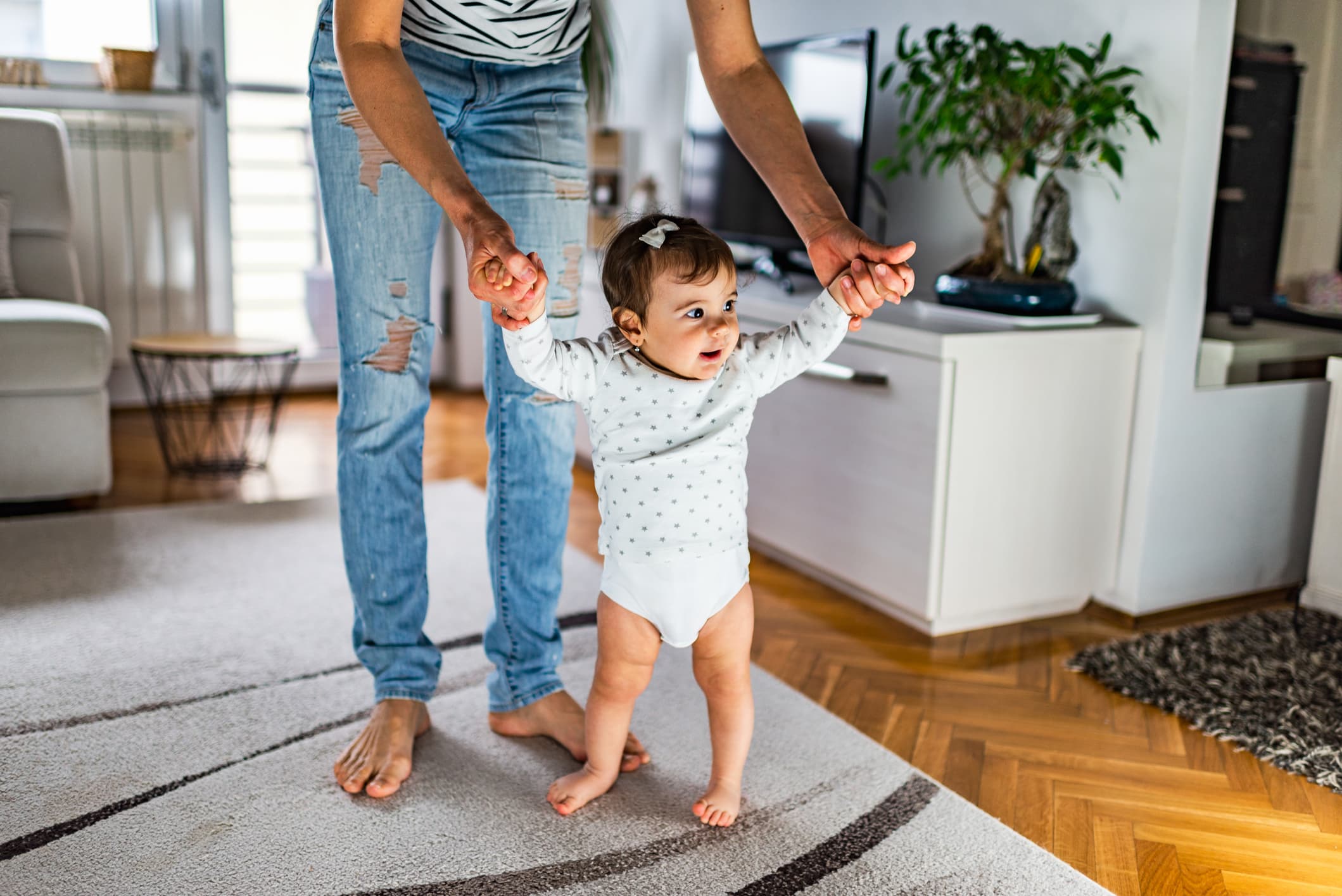
There’s something quietly magical about the moment your baby pushes themselves up, wobbles, and takes a step towards you. It’s pride, joy, and disbelief all rolled into one, and yes, probably a few happy tears too. That joy is often followed by questions, though, and before you know it, you’re wondering when babies start walking fully and whether your little one is right on track or happily doing things their own way.
In this blog, we’ll explore the stages that come before those first steps and the reasons for late walking in babies, offering reassurance, clarity, and perspective for parents who are cheering every wobble and waiting patiently for what comes next.
Baby walking stages: Step-by-step development
Understanding baby walking stages can help parents recognise milestones and support their child’s physical growth. Walking is a gradual process that develops over months, building on strength, coordination, and balance. Here’s a step-by-step guide to the typical progression.
- Tummy time and rolling (0–6 months)
During the first months, babies strengthen their neck, shoulder, and core muscles through tummy time. Rolling over also improves body awareness and coordination, laying the foundation for future mobility.
- Sitting independently (around 6 months)
Being able to sit without support is a key milestone. It helps babies develop balance and control over their torso, which is essential for pulling themselves up and eventually standing.
- Crawling or scooting (6–10 months)
Moving on hands and knees or by scooting across the floor builds leg and arm strength, enhances coordination, and teaches babies how to shift their weight; an important skill for walking.
- Pulling up to stand (8–12 months)
At this stage, babies start using furniture, walls, or adults’ hands to pull themselves into a standing position. This strengthens leg muscles and improves balance, giving them the confidence to explore vertical movement.
- Cruising (9–13 months)
Babies begin moving sideways while holding onto furniture for support. Cruising allows them to practise weight shifting and step coordination, preparing them for independent walking.
- Standing alone (around 11–14 months)
Standing without support is a major confidence booster. Babies learn to balance their body weight, adjust their posture, and gain the stability needed to take those first independent steps.
Most babies take their first independent steps between 12 and 15 months, although a range of 9 to 18 months is considered normal.
Signs your baby will walk soon
One day, your baby is happily cruising around the sofa, and the next, you’re wondering if those tiny steps are just around the corner. If you’re on the lookout for the signs baby will walk soon, there are a few tell-tale clues your little one may already be giving you.
- Pulling up to stand frequently
Your baby uses furniture, your legs, or any sturdy surface to pull themselves upright, showing growing leg strength and confidence. - Cruising along furniture
Moving sideways while holding onto sofas or tables helps babies practise balance and coordinated stepping. - Standing without support
Even a few seconds of standing alone is a strong indicator that your baby is building the balance needed for walking. - Taking steps with support
Holding your hands or pushing a stable toy while stepping forward shows readiness to walk independently. - Improved balance and fewer falls
Your baby recovers more easily after wobbling and seems steadier on their feet. - Bending down and standing back up
This movement shows developing muscle control and coordination.
Normal age range for a baby’s first steps
One of the most common questions parents ask is when babies start walking, and the answer can vary widely. Most babies take their first independent steps between 12 and 15 months, although anywhere from 9 to 18 months is considered within the normal range. Factors such as muscle strength, confidence, temperament, and opportunities to practise movement all influence when a baby begins walking. As long as your child continues to show steady physical development, such as crawling, standing, and cruising, there is usually no cause for concern, even if their first steps come a little later than others.
Holding your hands or pushing a stable toy while stepping forward shows readiness to walk independently.
Reasons for late walking in babies
If your little one seems perfectly happy crawling while other babies of their age are already toddling, don’t panic; there are many reasons for late walking in babies, and most of them are completely normal.
- Individual development pace: Every baby grows at their own speed. Some focus on crawling, talking, or fine motor skills first before turning their attention to walking.
- Cautious walking: Some babies are naturally careful and prefer to feel confident and stable before letting go and taking independent steps.
- Premature birth: Babies born early may reach physical milestones later when measured by their corrected age.
- Low muscle tone: Reduced muscle strength can make balancing and standing more challenging, leading to delayed walking.
- Limited opportunity to practise: Spending long periods in carriers, bouncers, or walkers can reduce the floor time needed to build strength and coordination.
- Genetic factors: A family history of late walking can influence when a baby starts walking.
- Underlying medical conditions: In rare cases, neurological or musculoskeletal issues may affect walking development and require professional assessment.
How parents can support their baby’s walking development
Parents play an important role in encouraging their baby’s physical development, especially during the transition from crawling to walking. Creating a supportive environment can help build confidence and reduce common baby walking problems without placing unnecessary pressure on your child.
Providing plenty of safe floor time allows babies to move freely, strengthen their muscles, and practise balance. Encouraging tummy time, even beyond the early months, helps develop the core strength needed for standing and walking. Sturdy furniture or push toys can be used to support pulling up, cruising, and early steps, but baby walkers that carry the child’s weight should be avoided, as they may interfere with natural muscle development.
Letting your baby walk barefoot indoors improves balance and strengthens foot muscles, while positive encouragement and patience help boost confidence. Most importantly, follow your baby’s lead; gentle support and consistent opportunities to practise are often enough to overcome minor baby walking problems and help your little one progress at their own pace.
Activities that help babies learn to walk
Watching your little one wobble, pause, and try again is all part of the joy of baby learning to walk. With the right activities, you can turn everyday playtime into gentle practice sessions that build strength and confidence.
- Plenty of floor time
Allowing your baby to move freely on the floor helps strengthen core, leg, and arm muscles. Crawling, rolling, and pushing up naturally support the balance and coordination needed for walking.
- Cruising along furniture
Placing sturdy furniture at baby height encourages your child to move sideways while holding on. This activity supports balance and step coordination and fits naturally into different baby walking stages.
- Push toys and walkers
Stable push toys help babies practise stepping forward while feeling supported. These toys encourage forward movement without lifting the baby’s weight off their feet.
- Barefoot practice
Letting your baby walk barefoot indoors improves grip, balance, and foot muscle strength, which are essential for confident walking.
- Interactive reach-and-step games
Sitting a short distance away and encouraging your baby to reach for you or a favourite toy motivates them to take steps independently.
- Mini obstacle points
Soft cushions, rolled towels, or pillows placed on the floor encourage stepping over or around objects, helping improve balance and spatial awareness.
Quick Tip
Placing sturdy furniture at baby height encourages your child to move sideways while holding on.
Delayed walking: Signs you should consult a paediatrician
While many variations in walking age are normal, there are situations where delayed walking may need medical attention. Understanding the reasons for late walking in babies can help parents recognise when professional guidance is necessary rather than simply waiting it out. You should consider consulting a paediatrician if your baby is not bearing weight on their legs by around 18 months, shows little interest in standing or cruising, or has difficulty balancing even with support.
Other signs include noticeable muscle stiffness or weakness, unequal use of one side of the body, or delays in other developmental milestones such as sitting or crawling. Babies who were born prematurely or who have a family history of developmental delays may also benefit from early evaluation. A paediatrician can assess your child’s muscle strength, coordination, and overall development, and recommend physiotherapy or further investigations if needed. Early assessment helps identify underlying causes and ensures timely support, giving your child the best chance to progress confidently.
Red flags you must watch out for
- Difficulty in getting up from sitting position (signs towards hip/thigh muscles weakness)
- Unusual stiffness of limbs on one or both sides
- Limping of dragging of legs
- Persistent toe walking
- Poor balance/ frequent falls.
Conclusion
Every parent looks forward to that magical moment when their baby starts moving independently, but it’s easy to wonder when babies start walking. The truth is, there’s no single timeline; what matters most is giving your little one space to explore, plenty of encouragement, and opportunities to practise safely. Each tiny step, wobble, and attempt is part of their learning journey, and celebrating those moments makes the experience just as special as the first confident stride.
Frequently Asked Questions
1. How can I tell if my baby will walk soon?
Signs include pulling up frequently, cruising confidently, standing without support for a few seconds, and taking steps while holding onto furniture or hands.
2. Is it normal if my baby skips crawling?
Yes, some babies skip crawling and move straight to pulling up, cruising, or walking. As long as other developmental milestones are being met, this is usually not a concern.
3. How can parents support their baby’s walking development?
Encourage floor time, allow barefoot practice indoors, provide sturdy furniture for support, and offer gentle encouragement without pressure.
Share Article