

 Medically Reviewed
Mental Health
Mindfulness Meditation: A Complete Guide to Benefits, Techniques & Getting Started
May 26, 2026
•6 min read
Share Article


Let's be honest, our minds rarely stay in one place. One moment you're replying to a message, the next you're thinking about dinner, deadlines, or replaying something slightly embarrassing from years ago. It's a familiar cycle, and for many of us, the mind often slips into autopilot without us even realising it.
This is where mindfulness meditation can make a difference. It helps you slow down, stay present, and gently bring your attention back to the here and now, allowing your mind to breathe instead of constantly racing from one thought to another.
The best part? You don't need a retreat, special setting, or hours of free time to begin. Mindfulness is simple, accessible, and something anyone can practise. Dive into this article to explore how to get started, understand the benefits of mindfulness meditation, and discover how it can bring greater clarity, balance, and calm to your everyday life.
What is mindfulness meditation, and how does it work?
Mindfulness meditation is a mental practice that involves attending to the present moment without any judgment. Mindfulness does not teach you to stop thinking; it teaches you to pay attention to what you are currently thinking and to bring your mind back to something ordinary, which, in most cases, is your breathing.
In our day-to-day life, our minds are always going back to the past and the future. Mindfulness meditation restores one to the present.
During practice, people typically focus on their:
- Breathing
- Body sensations
- Sounds around them
- Thoughts and emotions
The goal isn't to empty your mind completely. Instead, you observe your thoughts without reacting or getting caught up in them.
Mindfulness meditation is a mental practice that involves attending to the present moment without judgment.
Meditation and mindfulness: Understanding the key differences and connection
Many people assume meditation and mindfulness mean the same thing, but they're slightly different.
Meditation is a broader category of mental practices aimed at improving focus, awareness, and emotional balance. Mindfulness, on the other hand, is the state of being fully present and aware of the current moment.
So how do they connect? Think of it this way:
- Meditation = the practice
- Mindfulness = the mental state you develop through practice
When people practise mindfulness meditation, they use meditation techniques to build mindfulness in everyday life.
Meditation is the practice, while mindfulness is the skill developed through that practice.
Top mindfulness meditation benefits for mental and physical health
Among the factors that have facilitated the popularity of mindfulness is the numerous benefits of mindfulness meditation.
- Reduced stress
Stress reduction is one benefit of mindfulness meditation training. It relaxes the nervous system, reduces stress hormones, and makes the mind react more positively to daily issues.
- Better attention and concentration
The practice of mindfulness meditation enhances concentration and attention. It works to train the brain to be always in the moment and less distracting so you can be more concentrated on what is going on.
- Better emotional balance
Among the significant benefits of mindfulness meditation, one can distinguish better emotional regulation. Mindfulness assists you in observing emotions without being reactive and enhances emotional stability. - Improved sleep quality
Meditative mindfulness calms the mind and body and contributes to the reduction of the speeding thoughts at night. This facilitates easier sleep and enhances the quality of sleep.
Mindfulness meditation for beginners: How to start the right way
Starting mindfulness meditation for beginners doesn’t need to be complicated. Focus, awareness, and calmness can be gradually developed with the help of simple steps and daily habits, such as training in mindfulness meditation.
- Find a quiet space
Find a quiet and cosy spot that will not distract you. It is important to note that a silent environment facilitates beginners to concentrate more on breathing and body awareness, so that it becomes easier to remain present in the mindfulness meditation practice. - Sit comfortably
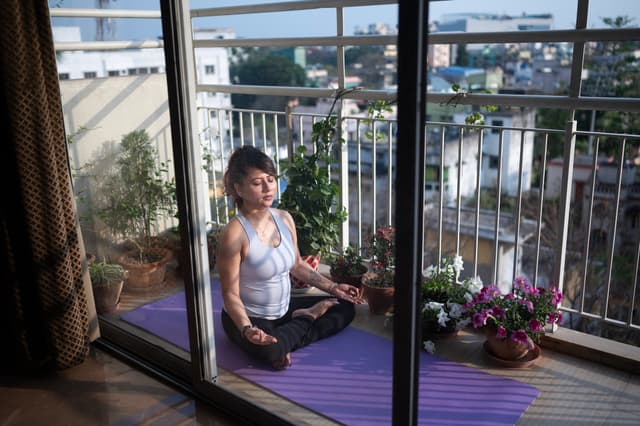
Mindfulness meditation, as a beginner, does not require special poses. Just sit back on a chair or the floor with your back straight. An upright position that is relaxed will help one to be alert and, at the same time, calm the body. - Focus on your breathing
Focus on the breathing rhythm in your body. Be aware of the movement of air in and out of your body. Breathing when we practice mindfulness meditation serves as an anchor or a way for the mind to be gently brought back to track once you have lost focus. - Start small
0-minute training is more effective than a long period of training, especially for the new trainee. Begin with five minutes a day, and gradually increase to more time. With the gradual benefits of mindfulness meditation, consistent practice makes beginners feel less overwhelmed.
An upright position that is relaxed will help one to be alert and, at the same time, calm the body.
Common challenges in mindfulness practice (and how to overcome them)
Many beginners worry that they’re “doing meditation wrong.” The truth is, these challenges are completely normal.
- Wandering thoughts
A wandering mind is one of the biggest problems of mindfulness meditation among beginners. The thoughts regarding work, duties, or past incidents may persistently occur. You do not need to combat these thoughts, but just pay attention to them and just calmly refocus your attention on your breath.
- Restlessness or discomfort
Several minutes sitting in a fixed position may not be a comfortable thing, at least to a beginner. You can be impatient or restless when meditating. Begin with shorter sessions and select a position of ease. The mind and the body become accustomed to stillness over time. - Problem sustaining consistency
Quite often, people begin meditating with good intentions only to get stuck in the process. Schedules and distortions tend to disrupt routine. The most effective way to stay consistent is to meditate at the same time each day, even for just five minutes.
- Expecting instant results
Many beginners expect instant happiness or relaxation while meditating. However, the benefits of mindfulness meditation develop gradually with consistent practice. Being patient with the process allows you to build a more sustainable and enjoyable meditation habit over time.
How to build a daily mindfulness meditation routine?
Building a consistent mindfulness meditation routine doesn’t have to be complicated. Small, manageable habits can help you stay consistent and experience long-term mindfulness meditation benefits.
- Set time: Select a designated time to meditate on a daily basis: morning or bedtime.
- Start with shorter sessions: In the case of mindfulness meditation, as a beginner, it is good to start with 5-10 minutes per day and expand the time.
- Find a calm place: It is important to have a place where you can sit without distractions.
- Practice guided meditation: Guided meditation, using apps or audio-guided instructions, can help beginner meditators stay on track and learn the fundamentals of meditation and mindfulness.
- Breathing: This is where you use breathing to come back to yourself whenever you lose track.
- Flexibility and persistence: It takes time to establish a meditation habit, and you can reap the long-term benefits of mindfulness meditation by practising each day.
When to deepen your practice or seek guided support?
As you continue practising mindfulness meditation, you may want to explore deeper techniques.
Some options include:
- Guided meditation courses
- Mindfulness workshops
- Meditation retreats
- Working with a meditation teacher
Guided support can help refine your understanding of meditation and mindfulness and deepen your awareness.
Conclusion
When your head is like a browser with 47 tabs open, mindfulness meditation could be your refresh button. This practice is beautifully simple: no sophisticated equipment, no complex principles — only a couple of minutes of concentration on the present moment.
By exploring the topic of meditation and mindfulness, trying the techniques, and beginning with small steps, you will eventually be able to add some tranquillity and clarity to daily life.
Frequently asked questions
1. What is mindfulness meditation?
Mindfulness meditation is a process by which you give your attention to the present moment, typically by focusing on breathing, and note thoughts and feelings without judgment. It assists in enhancing attention, concentration, and mood stability.
2. How do you do mindfulness meditation?
To practise mindfulness meditation as a beginner: sit comfortably, focus on breathing, notice thoughts without reacting, and gently return attention to breathing.
3. What is an example of mindfulness meditation?
One easy method is concentrating on the process of breathing — noticing how you breathe in and out, feeling all the sensations, and gently redirecting focus whenever random thoughts arise.
Share Article
Related Articles

Jun 3, 2026
•6 min read
Medically ReviewedBurnout Syndrome Explained: Symptoms, Causes, Testing & Treatment Guide
May 26, 2026
•6 min read
Medically ReviewedMindfulness Meditation: A Complete Guide to Benefits, Techniques & Getting Started

Mar 6, 2026
•3 min read
Medically ReviewedWhy Punch Held On, And Why We Do Too: The Science of Comfort Objects