

 Medically Reviewed
Skin & Hair Health
Grey or White: Know The Reason Behind Your Hair Colour
Grey vs. white hair: Are these the same? Also, know the reason behind hair colour changes as we age. Whether you want to embrace your white strands, look like a celebrity or consider a change, here's what to know!
Mar 11, 2026
•6 min read
Share Article

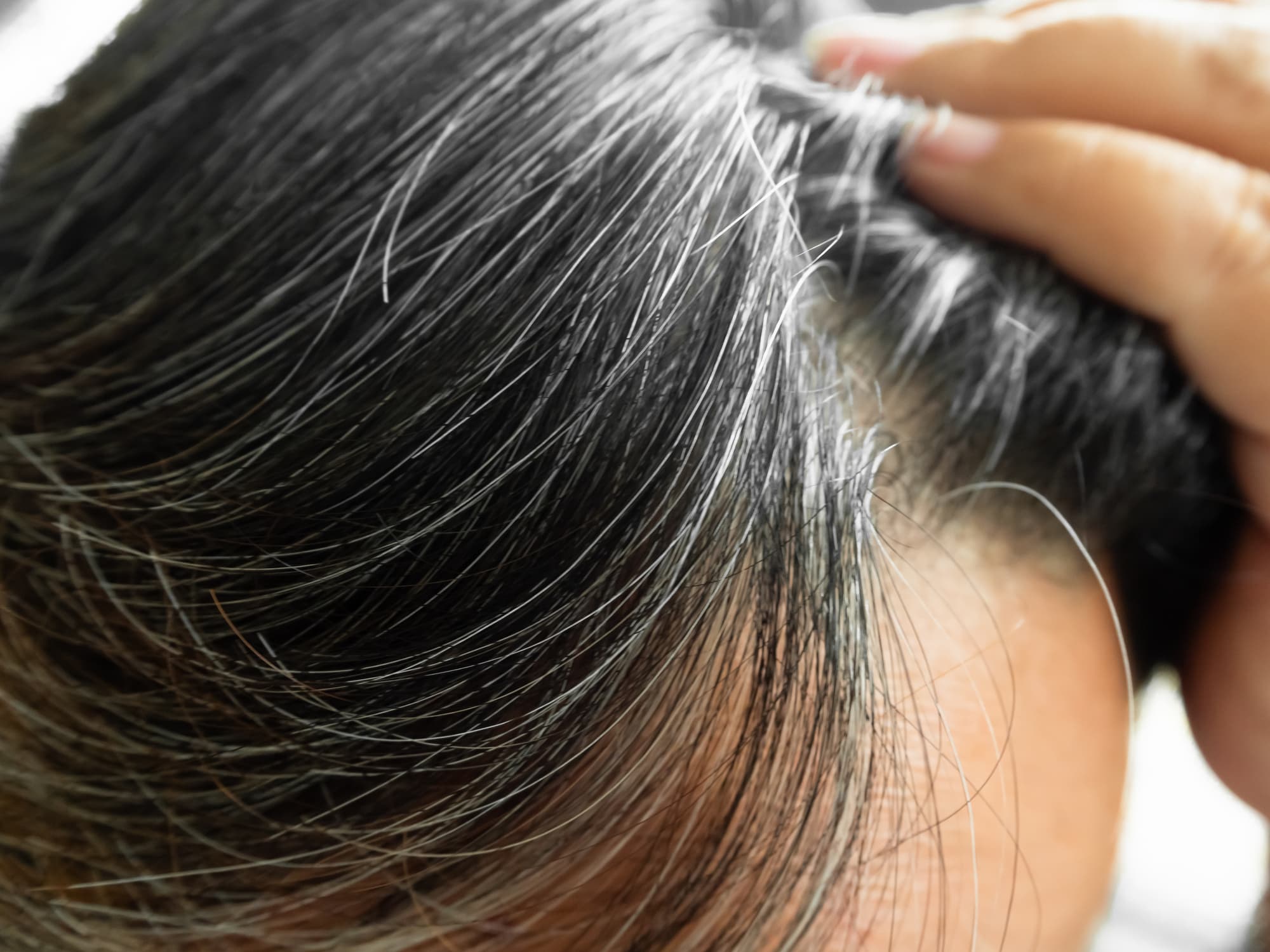
Wondering about remedies to turn white hair to black hair or restore your natural colour? You must know why white hair results after a certain age. Also, if you are in your 20s and already worried about the thought “why is my hair turning white at 20?”, you need to understand that it is your lifestyle, heredity, and so many other biological processes that can turn your hair either grey or white earlier than you expected. Let us explore the facts of white, grey and black hair in this blog.
Grey hair vs. white hair: Is there any difference?
Yes, grey and white hair are indeed different, but they are also related to each other in some sense. They are like twins who share lots of common features but have very different personalities.
Grey hair
Grey hair is the transition stage of hair. In this stage, hair is not producing the required amount of pigment or melanin as it once did. The grey colour is really a mixture of pigmented (your natural hair colour) and non-pigmented (white) hair, resulting in the salt and pepper look! Maybe it's best said that your hair is going through a bit of a fade. It's not colourless, but they are definitely headed that way.
Greying of hair occurs when the hairs become alternatively pigmented and non-pigmented, due to the reduction of melanin. White hair appears when the production of melanin completely stops, thereby not leaving a hint of colour in the hair.
White hair
White hair is simply formed when hair has stopped producing any kind of melanin. There is a total loss of pigmentation, leading to no colour, which is why white hair tends to look brighter and can almost glow under certain lights. So, if you are wondering, “Can white hair turn black?”, then the answer is simply no. However, one can delay the process to some extent and can also opt to colour the hair artificially.
Hair usually starts going white with age. However, the process can take place as early as the 20s or even 30s, and this happens significantly due to heredity and also due to the stress factors that we face these days.
What causes the hair to turn grey and white?
Our hair gets its colour from a pigment called melanin. The same pigment that gives colour to our skin and eyes. There are two types of melanin: eumelanin (which gives us black or brown hair) and pheomelanin (which gives us red or blonde hair).
As we age, melanocytes, the cells which produce melanin, start to slow down and stop producing pigment. If melanocyte production slows down but does not fully stop, then you grow grey hair. If the melanin production is completely stopped, well, you end up with white hair. So, although black hair turns white, the white hair does not turn black again.
And guess what? Some people get grey hair when they are in their 20s, and others don't see a single strand until they are 50 or 60 years old.
Our hair gets its colour from a pigment called melanin. The same pigment that gives colour to our skin and eyes.
Factors affecting hair colour
There are so many factors that might make your hair grey or white. These factors include:
- Genetics
This is probably the biggest factor. If you come from a family where the parents’ and grandparents’ hair turns grey or white at an early age, then you are bound to be just like them in this matter.
- Stress
According to some studies, chronic stress may also be a driving force for the greying process.
- Health disorders
A small percentage of people experience premature greying as a symptom of some other health disorders, such as vitiligo.
- Unhealthy lifestyle factors
Lifestyle factors such as an unhealthy diet and smoking, or exposure to pollutants, might affect melanin production.
How to take care of grey and white hair?
So now that we know what grey and white hair is, let's talk about how to care for it. Silver strands need just a little extra love than black hair.
1. Regular moisturisation
Greying and thinning hair tends to be drier than its pigmented cousins. This is a result of the decreased oil secretion from your scalp as you age. So, if you feel like your hair's gotten a bit harder, dry or more brittle, it’s time to use hydrating shampoos and conditioners. You can also add regular spas, hair oil massage and other treatments to your hair care routine.
2. Be aware of yellowing
Sometimes, you get a yellowish tint from grey and white hair if you spend a lot of time in the sun or swim in chlorinated pools. To avoid this, use a purple shampoo (A pigmented hair cleanser with a violet tint that uses colour theory to neutralise unwanted yellow and brassy tones in lightened or grey hair). It sounds odd, but purple shampoos really neutralise those pesky yellow tones and keep your hair looking fresh.
If greying is caused by nutritional deficiencies, stress, or lifestyle factors, it may be slowed or partially reversed by addressing the root cause. However, age-related or genetic greying is irreversible, as the melanocytes stop producing pigment permanently.
How to restore natural hair colour?
Restoring natural hair colour depends on the underlying cause of greying or dullness. Supporting overall hair health through a nutrient-rich diet (including adequate B vitamins, iron, copper, and protein), managing stress levels, and avoiding excessive chemical treatments can help maintain natural pigmentation. Using gentle, sulphate-free hair care products and protecting hair from heat and environmental damage also preserves colour vibrancy. While completely reversing grey hair is not always possible, adopting a holistic hair care routine can slow premature greying and enhance the hair’s natural tone and shine.
Myths and facts about grey and white hair
There are several myths about grey hair that need to be clarified:
Myth: Plucking one grey hair causes more to grow.
Fact: Plucking a grey hair does not lead to more grey hairs; however, it can damage the hair follicle.
Myth: Only old people get grey hair.
Fact: Grey hair can occur at any age, and genetics plays a major role in this when it happens.
Myth: Grey hair means your health is declining.
Fact: Grey hair is typically a result of genetics and ageing, and not a direct indicator of health issues.
Myth: Sun exposure causes hair to turn grey.
Fact: Sunlight can lighten hair, but it doesn't cause greying. Greying is mainly influenced by genetics and age.
Using gentle, sulphate-free hair care products and protecting hair from heat and environmental damage preserves colour vibrancy.
Conclusion
Grey or white hair is a part of the natural ageing process; anyone can undergo it. The actual difference between grey and white hair lies in how much pigment is left in your hair. Grey hair retains a tint of colour, whereas white hair has completely lost all its pigments. Whether it's your first silvery strand or a complete head of white, know that it is all a normal part of life. So, embrace the change, because that is what makes you, you!
Greying of hair is a natural part of ageing, but premature greying can often be delayed with a healthy lifestyle, proper nutrition, and hair care. While there is no permanent cure for age-related greying, natural remedies can help maintain healthy, youthful-looking hair.

Grey and white hair are both natural signs of ageing, caused by a decrease in melanin production. Both are normal and simply reflect the body’s changing over time.
Dr Geeta Garg, MBBS, MD, Dermatology, Chandigarh
Frequently Asked Questions
1. Can hair turn white overnight?
No! Hair cannot turn white overnight; hair starts turning white when melanin production is reduced.
2. Does stress cause white hair?
Stress accelerates the greying process, but it will not make your hair white overnight. Eventually, stress affects your health in general and causes your hair to grey or whiten earlier than it would have greyed or whitened otherwise.
3. Is it possible to turn white and grey hair black?
In most cases, white or grey hair cannot naturally turn black again, as greying is usually due to a permanent loss of melanin. While certain nutritional deficiencies or medical conditions may be reversible, complete restoration of natural colour is generally uncommon.
4. Is it bad to pluck grey hairs?
Plucking grey hairs is not harmful to your overall health, but it can damage hair follicles and may lead to thinning or ingrown hairs over time. It also won’t stop other hairs from turning grey.
Share Article
Related Articles
May 27, 2026
•4 min read
Medically ReviewedHow to Remove Blackheads from Nose: Effective Methods and Tips

Mar 31, 2026
•6 min read
Medically ReviewedHow to Keep Skin Hydrated: A Complete Guide for All Skin Types
Mar 30, 2026
•6 min read
Medically ReviewedHair Follicles Acting Up? Here’s All About Folliculitis